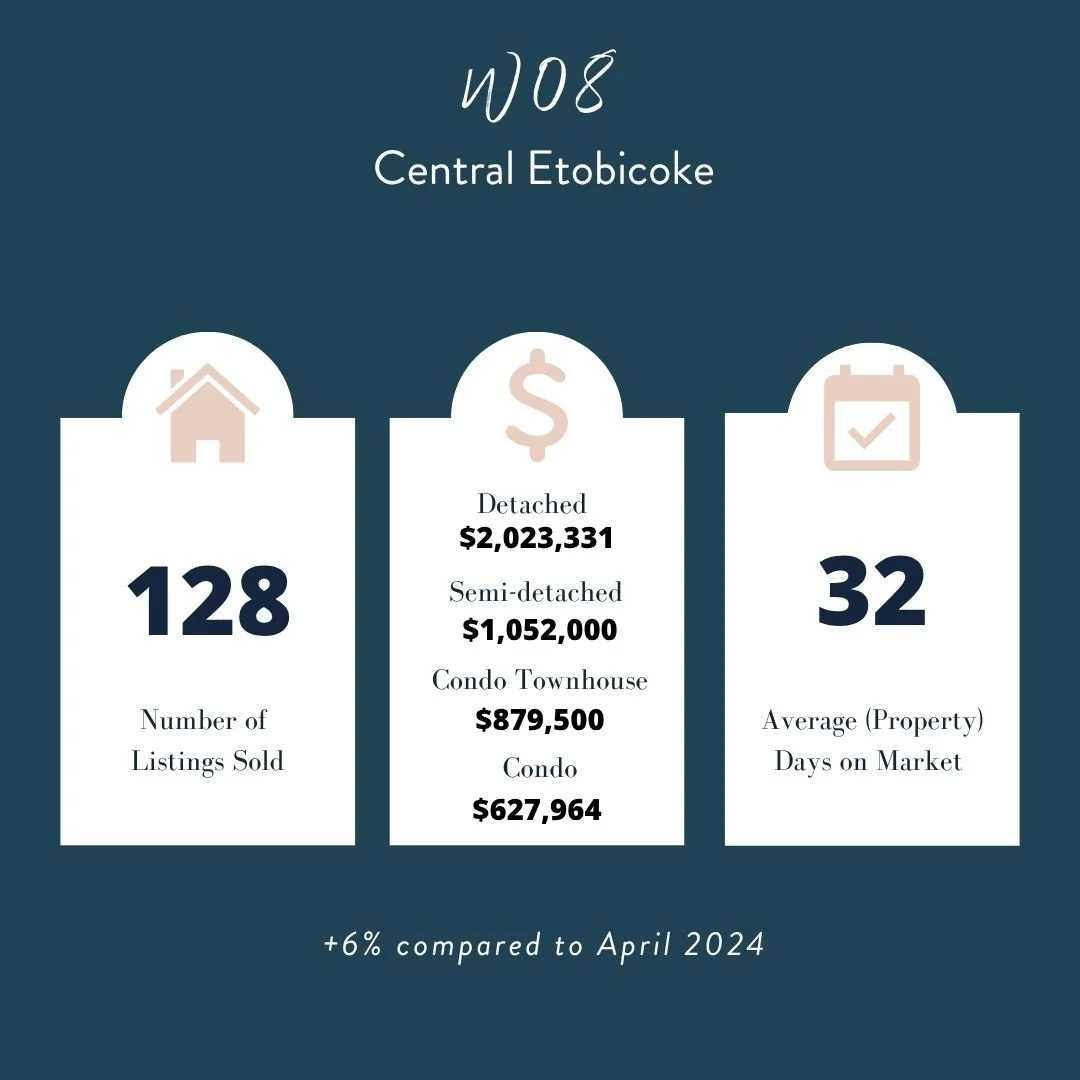
January Real Estate Report

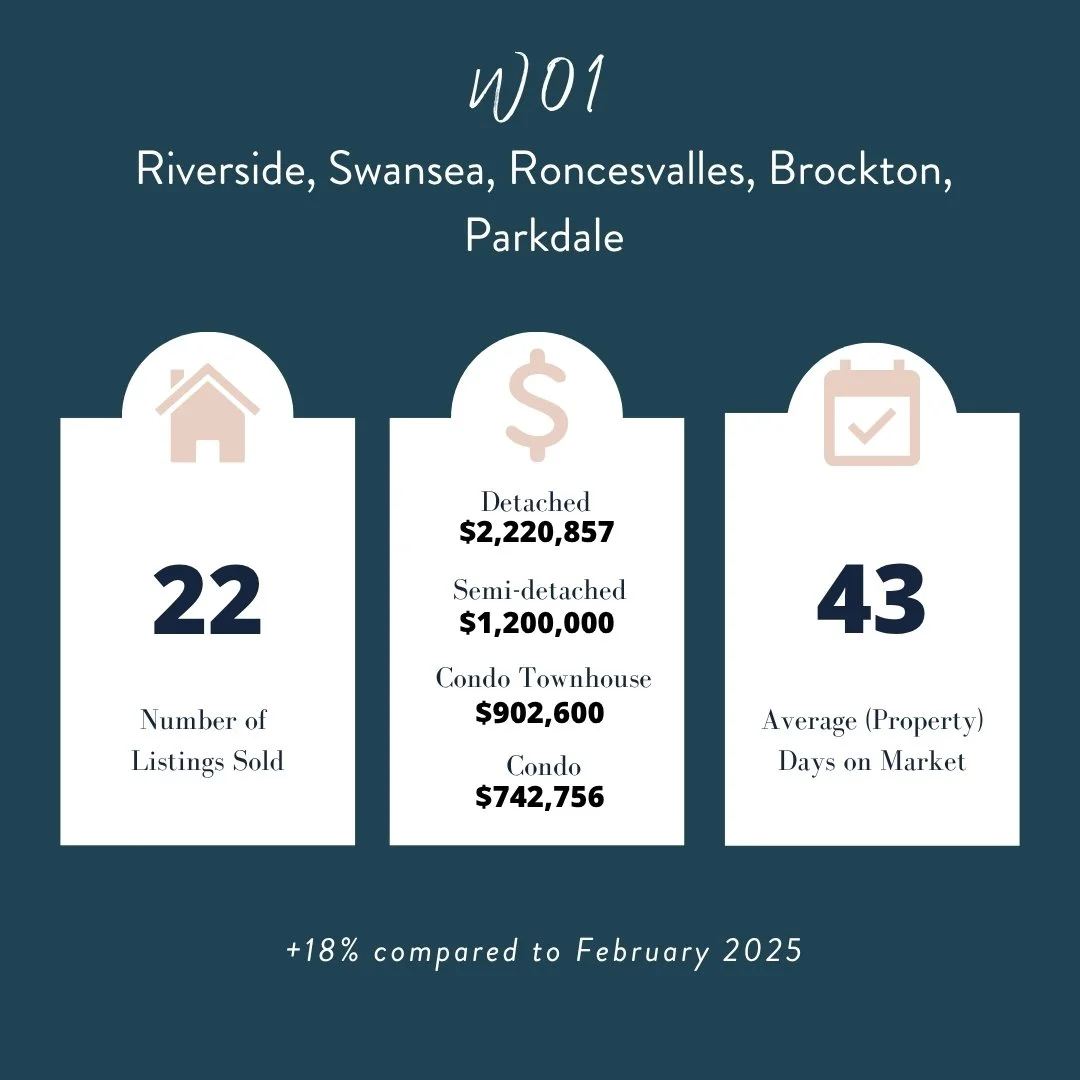
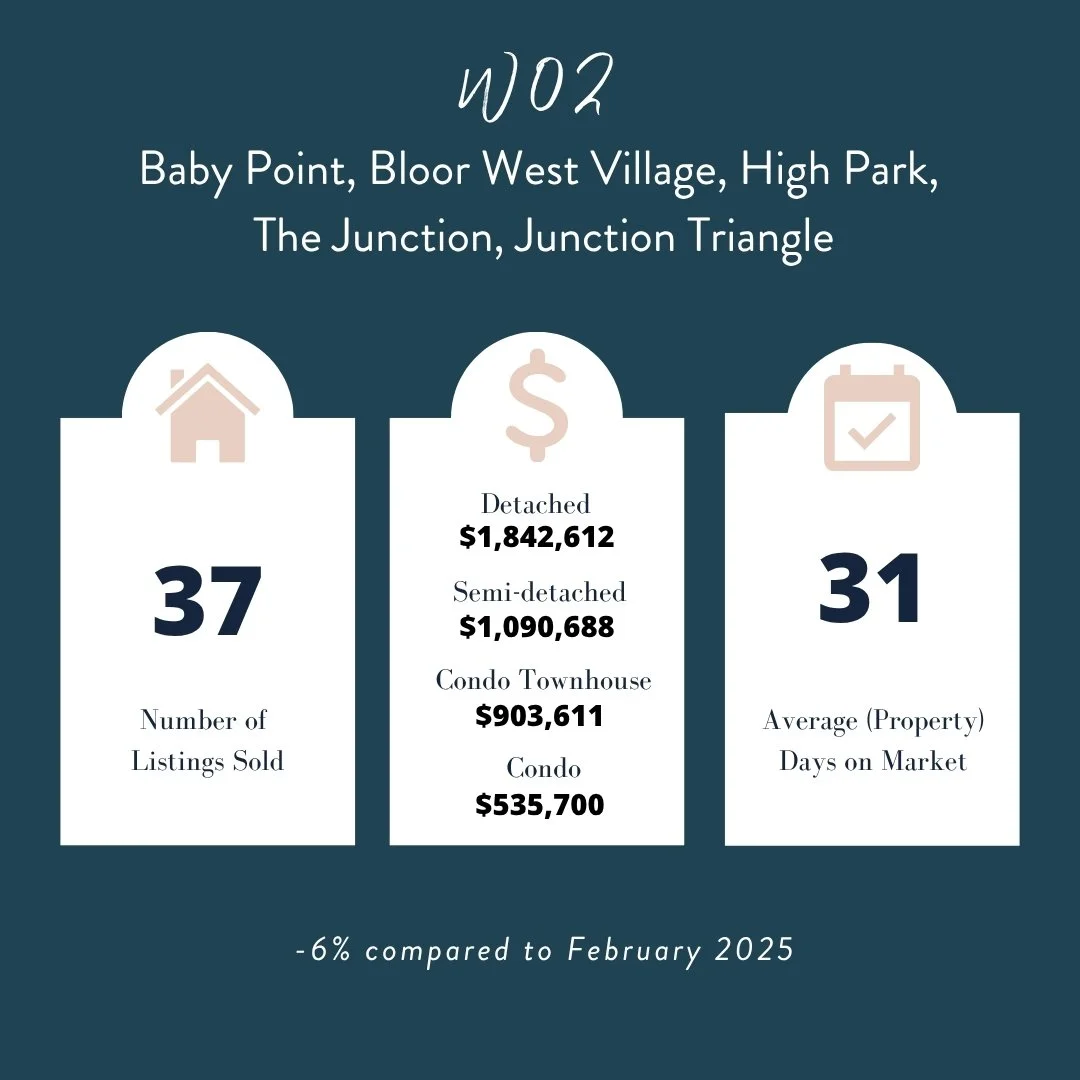
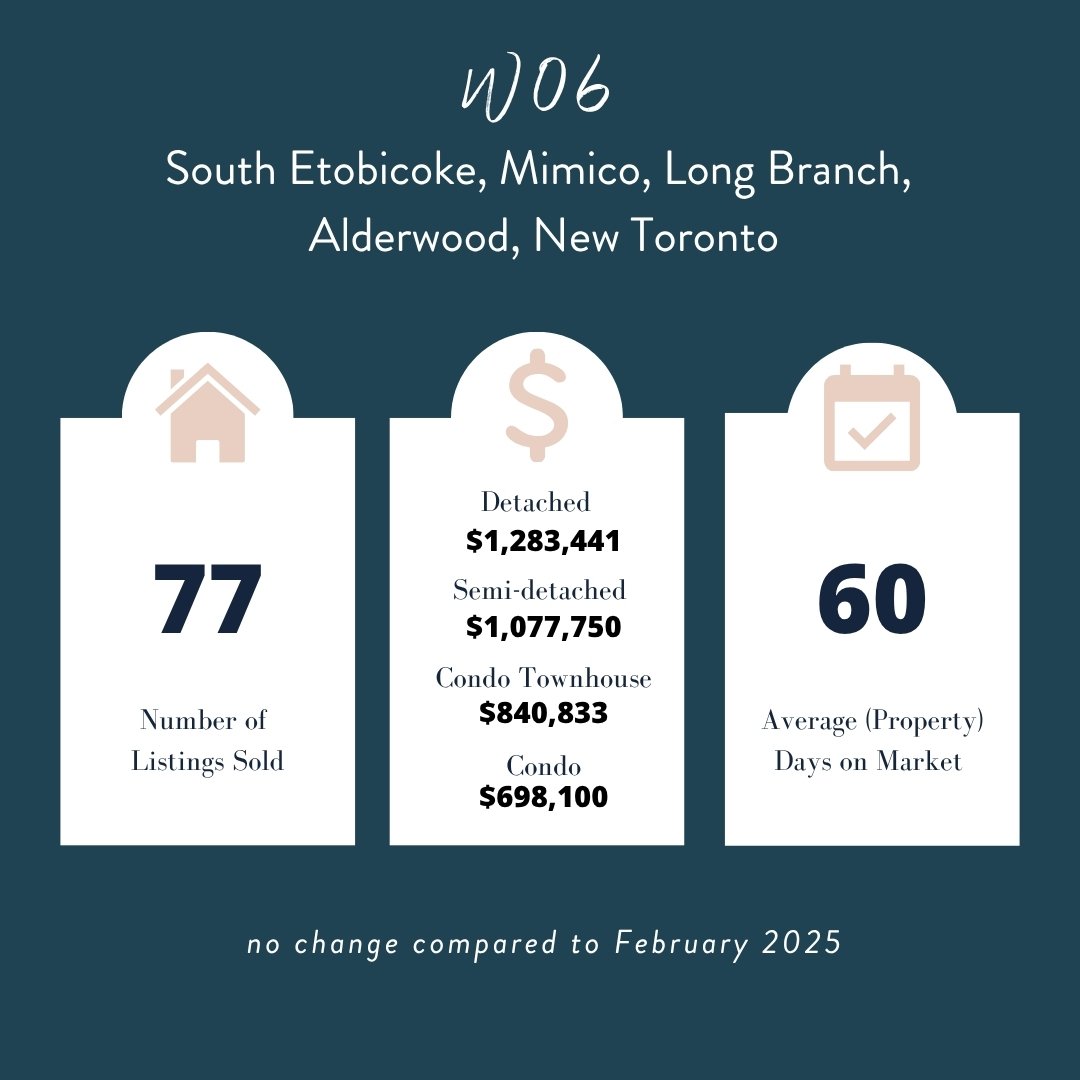
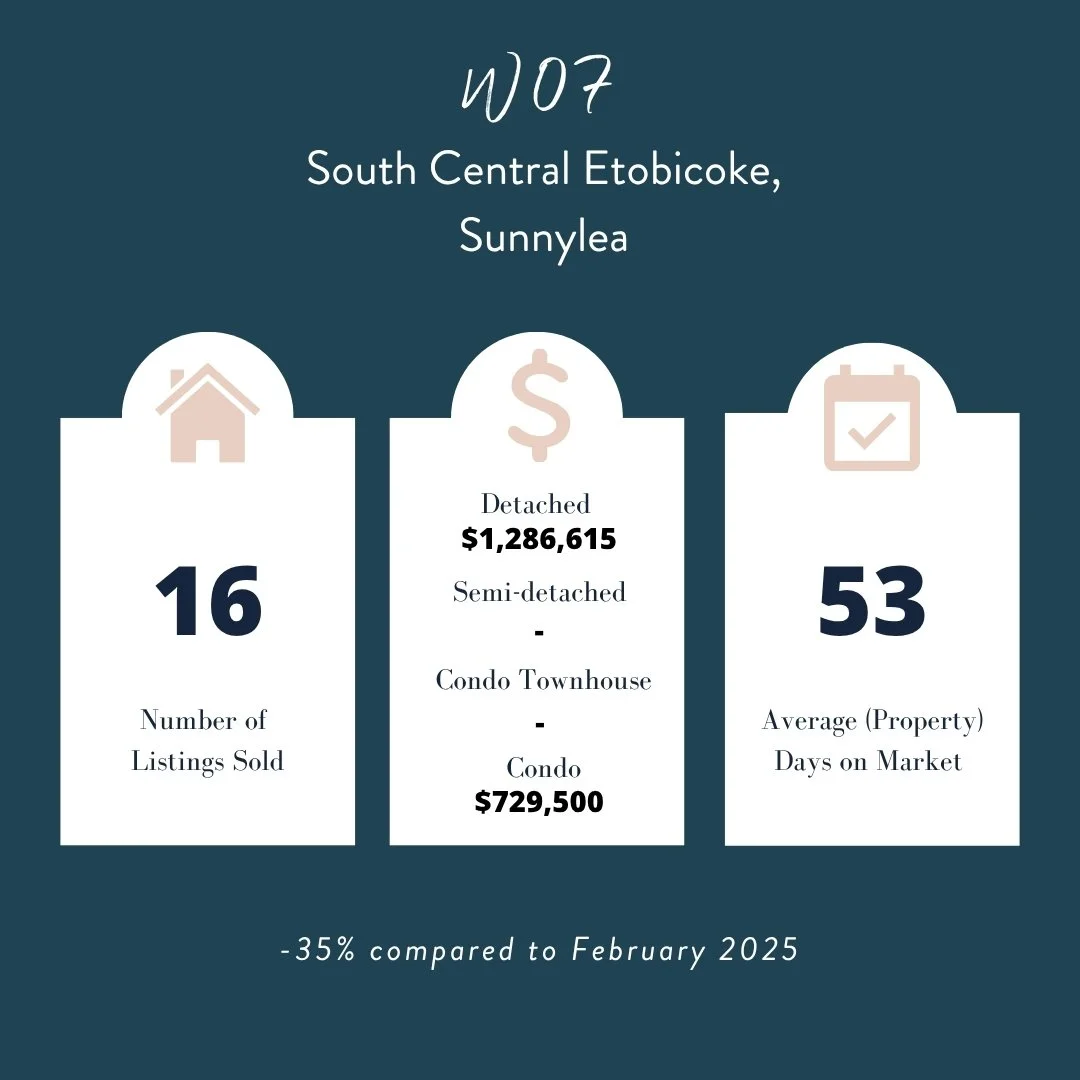
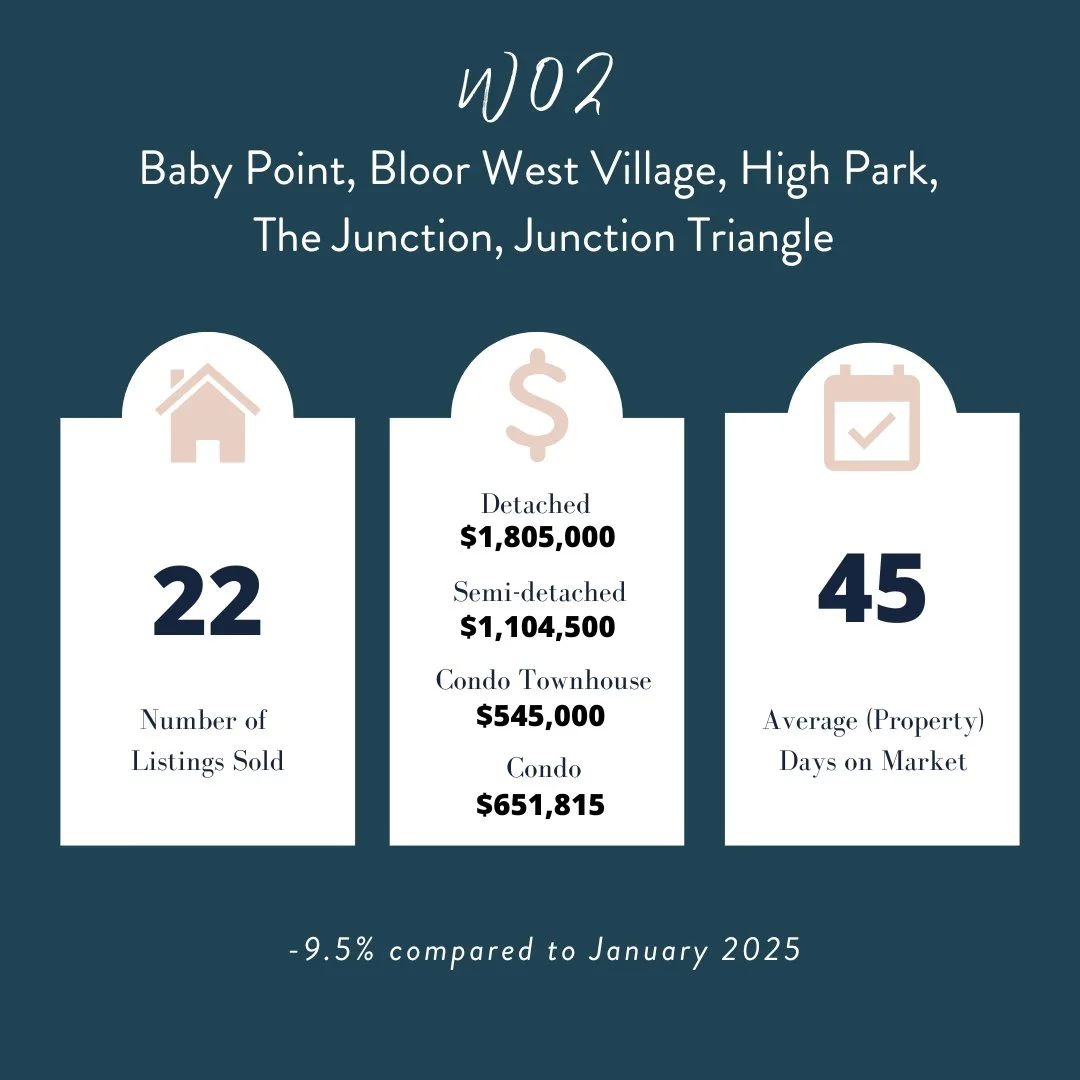
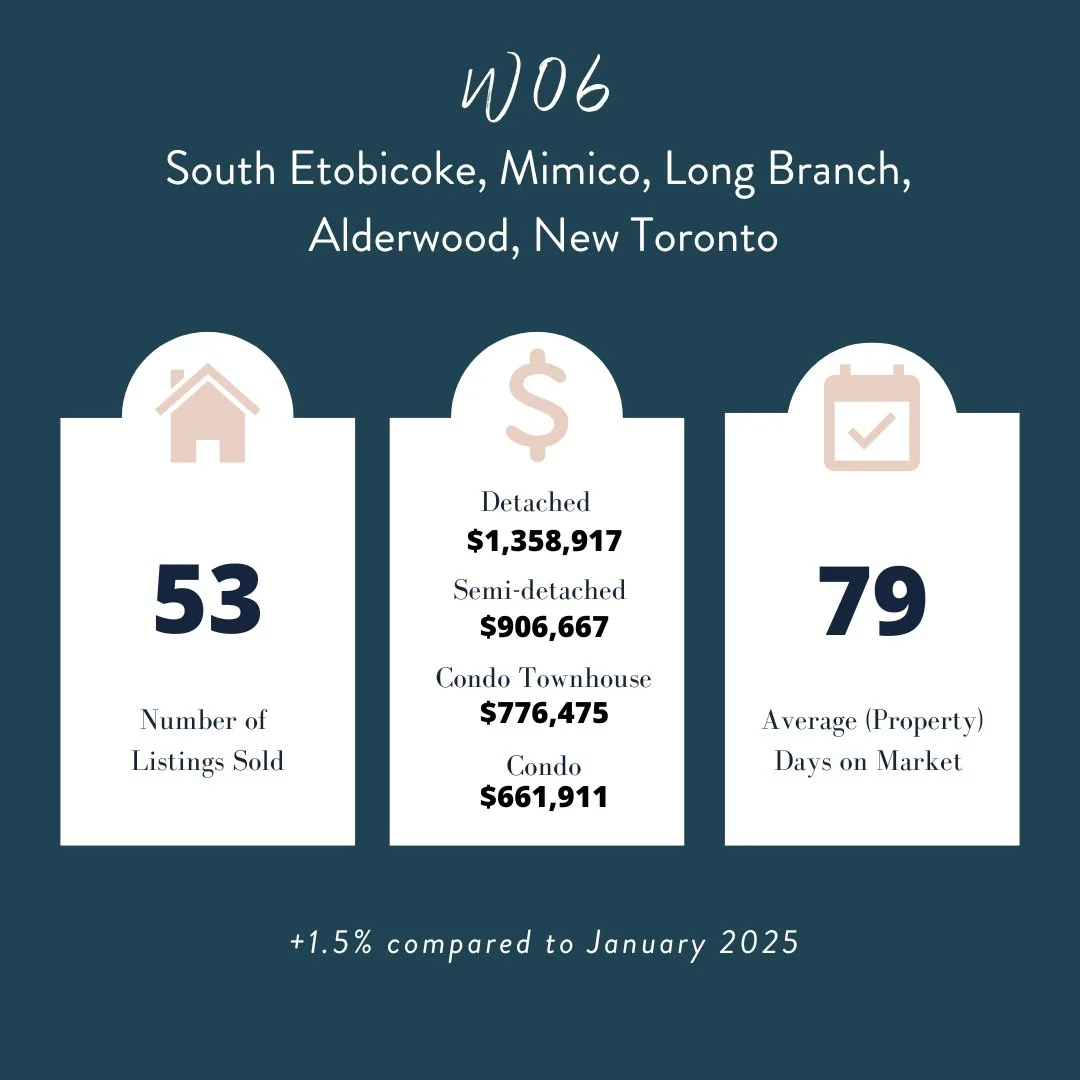
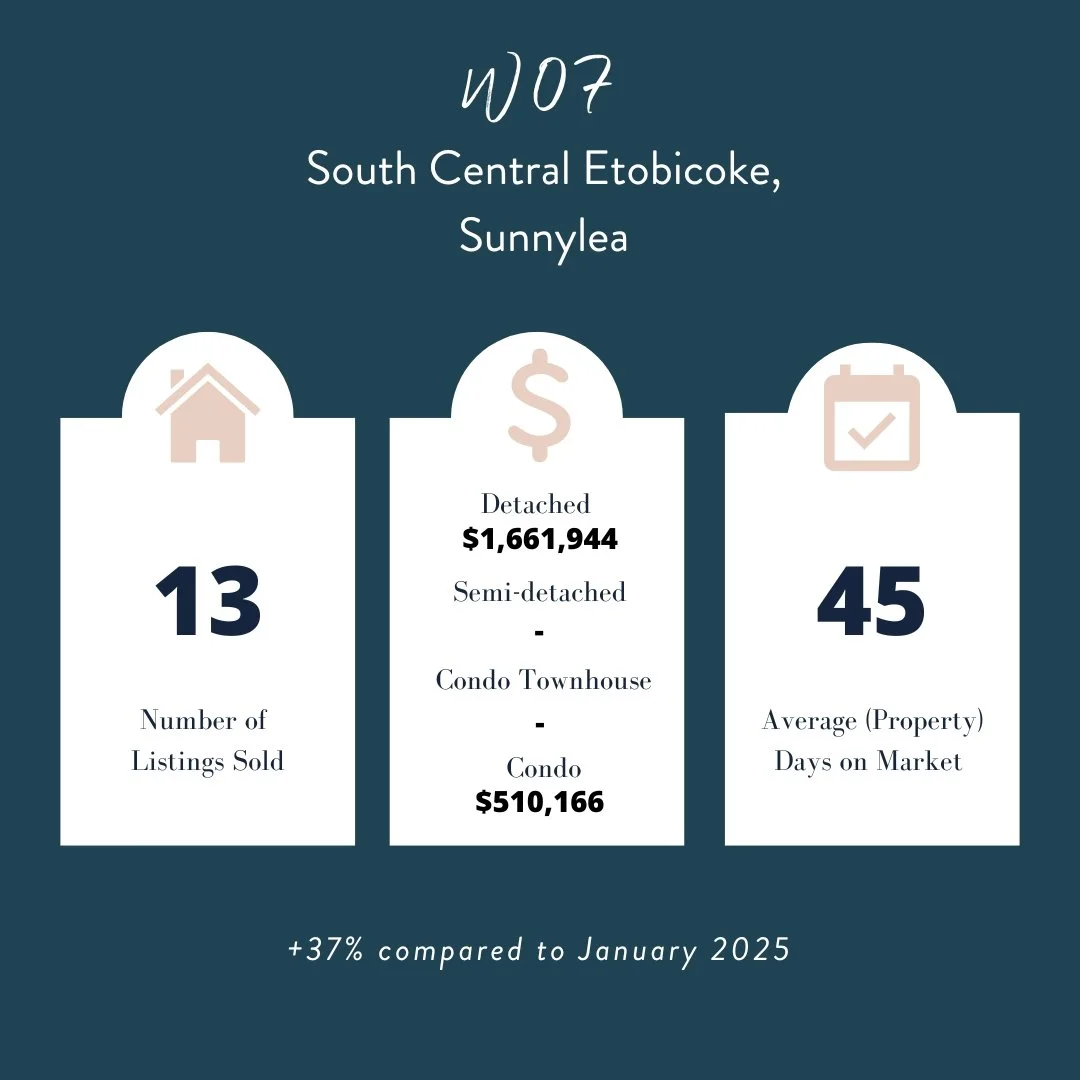
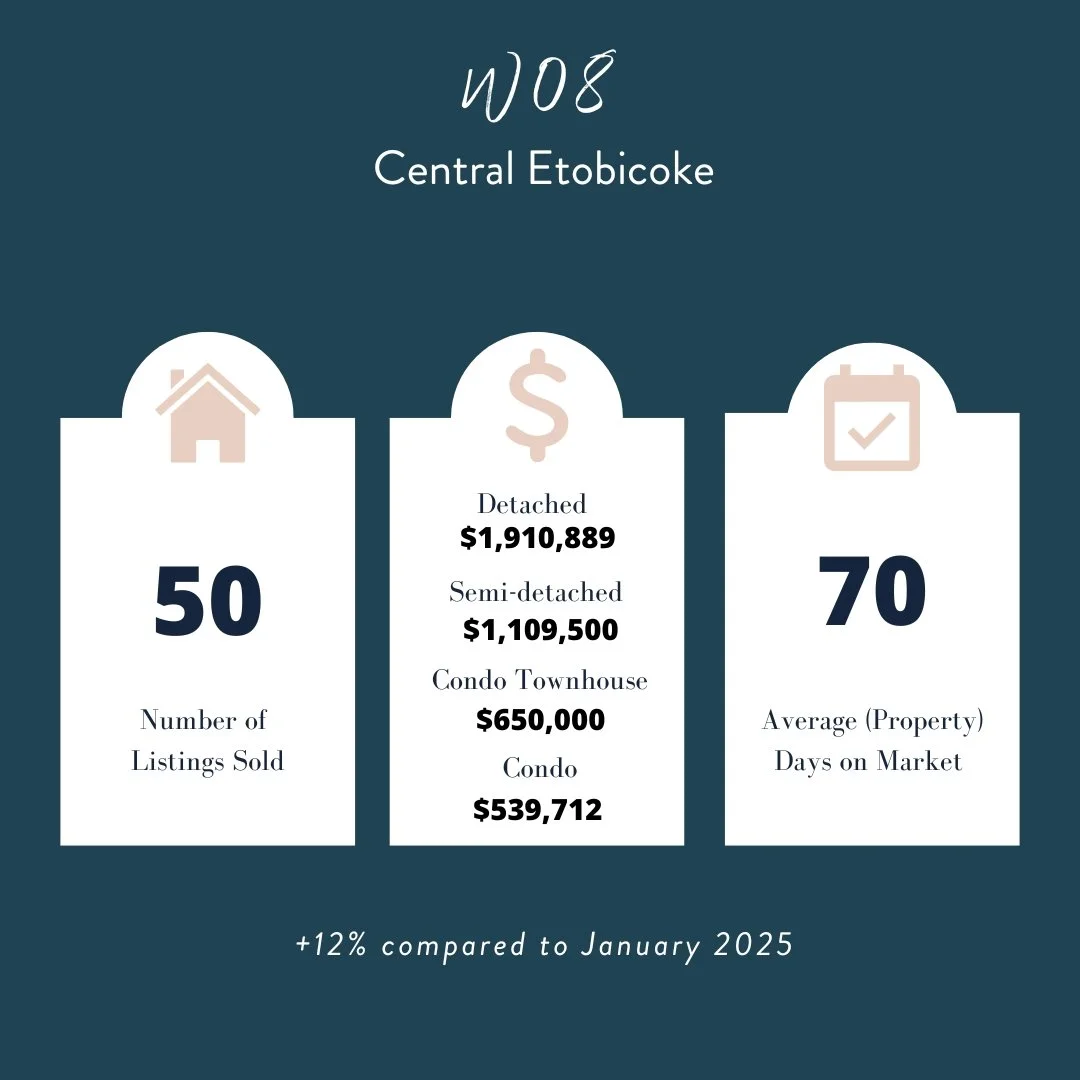
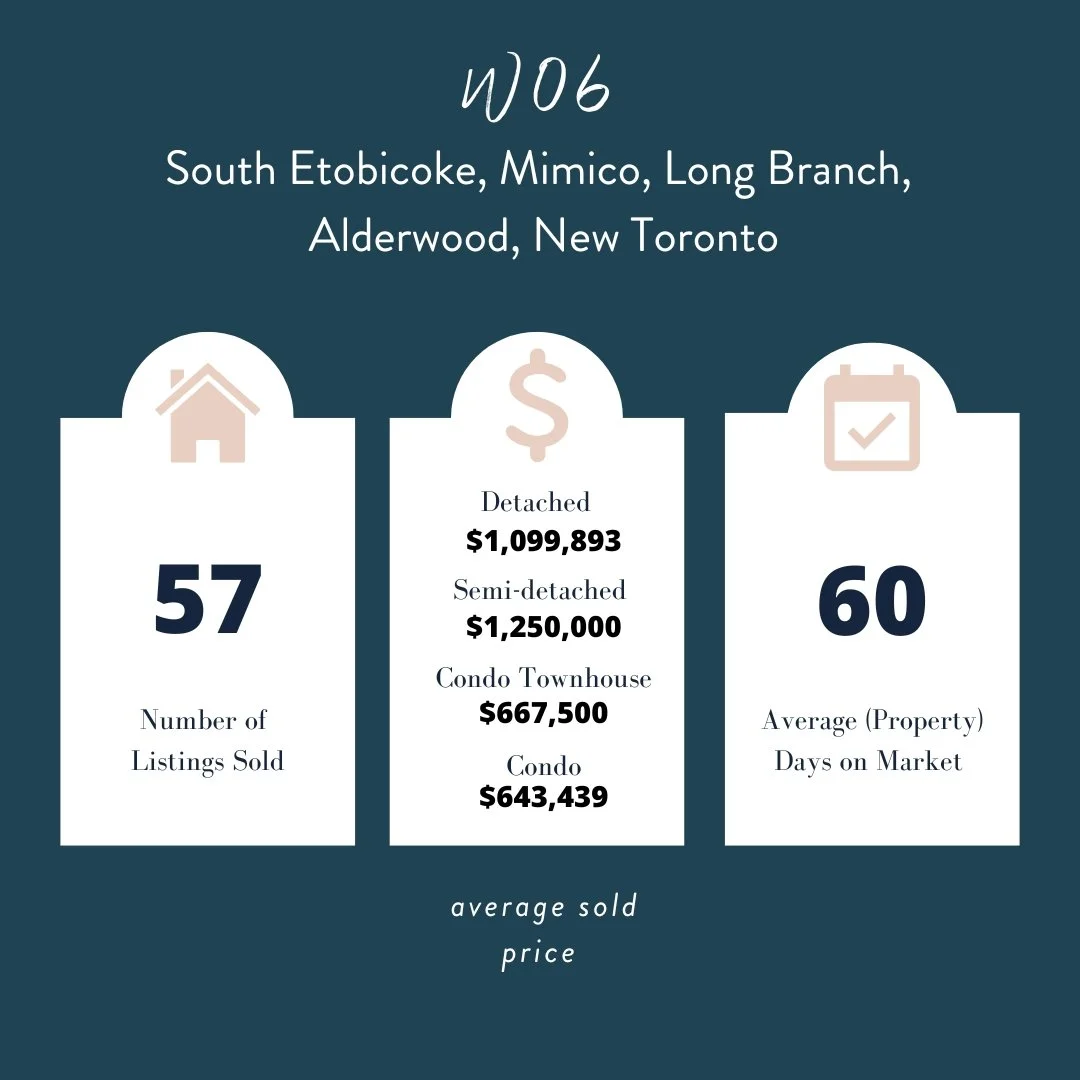
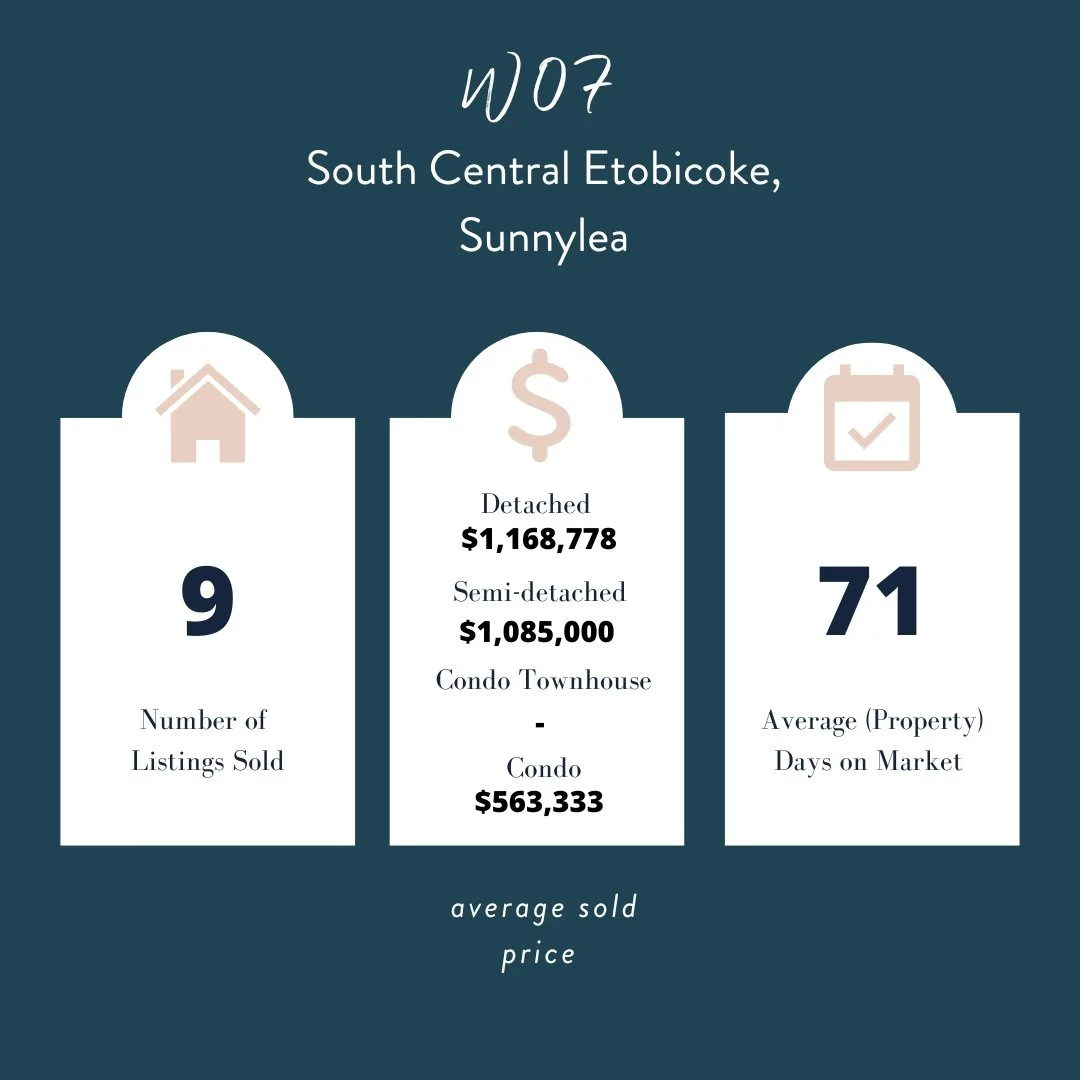
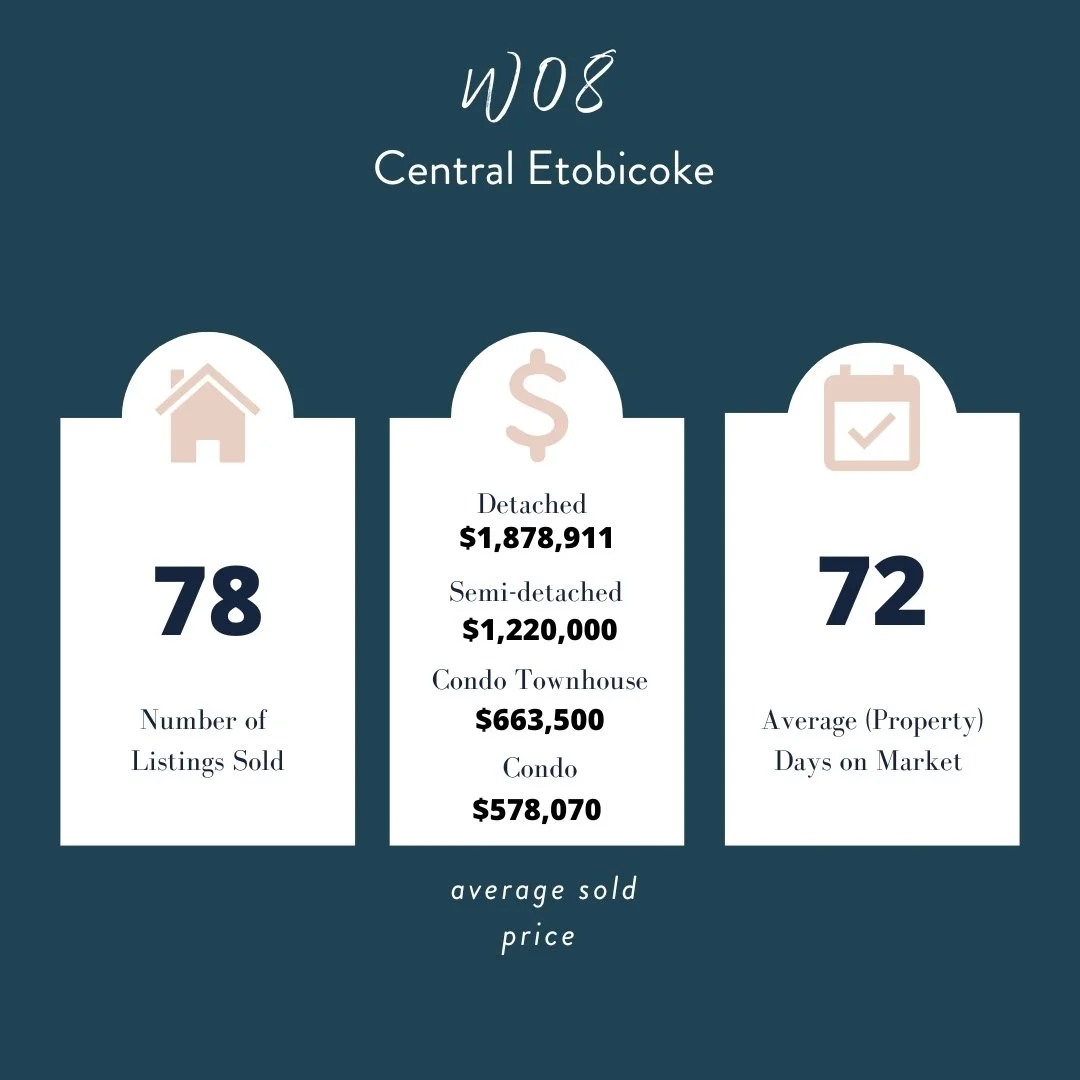
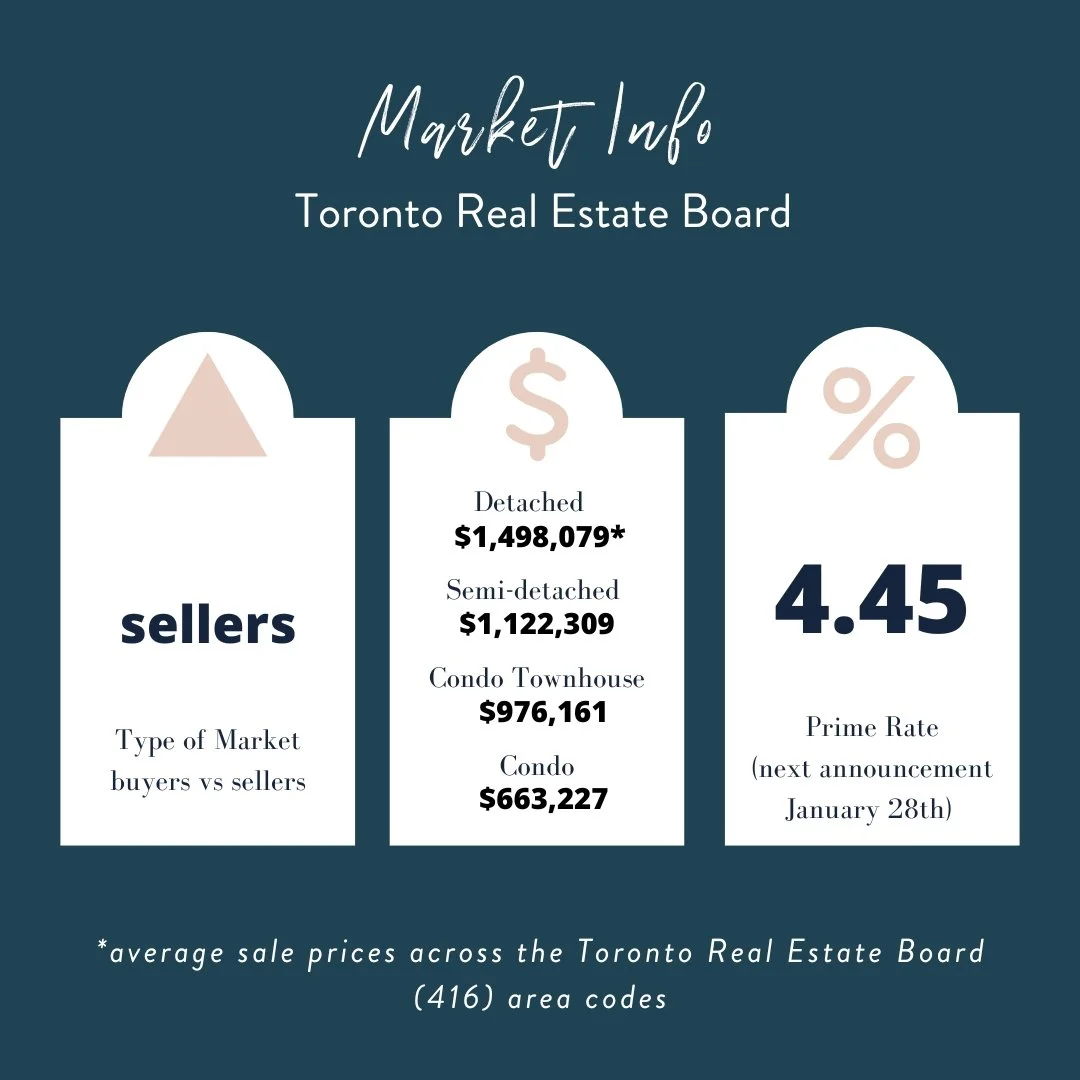
Toronto’s housing market began 2026 on a quieter note, with sales activity continuing to ease as affordability pressures and economic uncertainty keep many buyers on the sidelines. New listings were also lower than this time last year, signalling that some sellers are choosing to wait rather than test the market.

Prices continued to soften in January, reflecting an environment where buyers remain cautious and highly value-driven. Compared to late 2025, momentum slowed further, while available inventory edged higher—creating more choice and negotiating room for those actively in the market.

For buyers, today’s conditions are opening up opportunities that were largely out of reach during the peak years, particularly for those who are well-prepared and patient. For sellers, success continues to hinge on realistic pricing, thoughtful presentation, and a clear understanding of current buyer expectations.

Looking ahead, confidence will be shaped by interest-rate expectations and broader economic conditions. Until clearer signals emerge, Toronto remains a market where strategy, preparation, and expert guidance matter more than ever.

Data presented is for the City of Toronto only. Source: TRREB.

westtorontorealestatereport
top swansea real estate agents
top junction real estate teams
mimico real estate agents
how to choose a realtor
top toronto realtors

If you’re thinking about buying, now could be the time to prepare before demand picks up again.

If you’re a seller, strategic pricing and presentation will be key in this market.

Have questions? Reach out anytime!

December Real Estate Report

The Numbers for December 2025 are in!

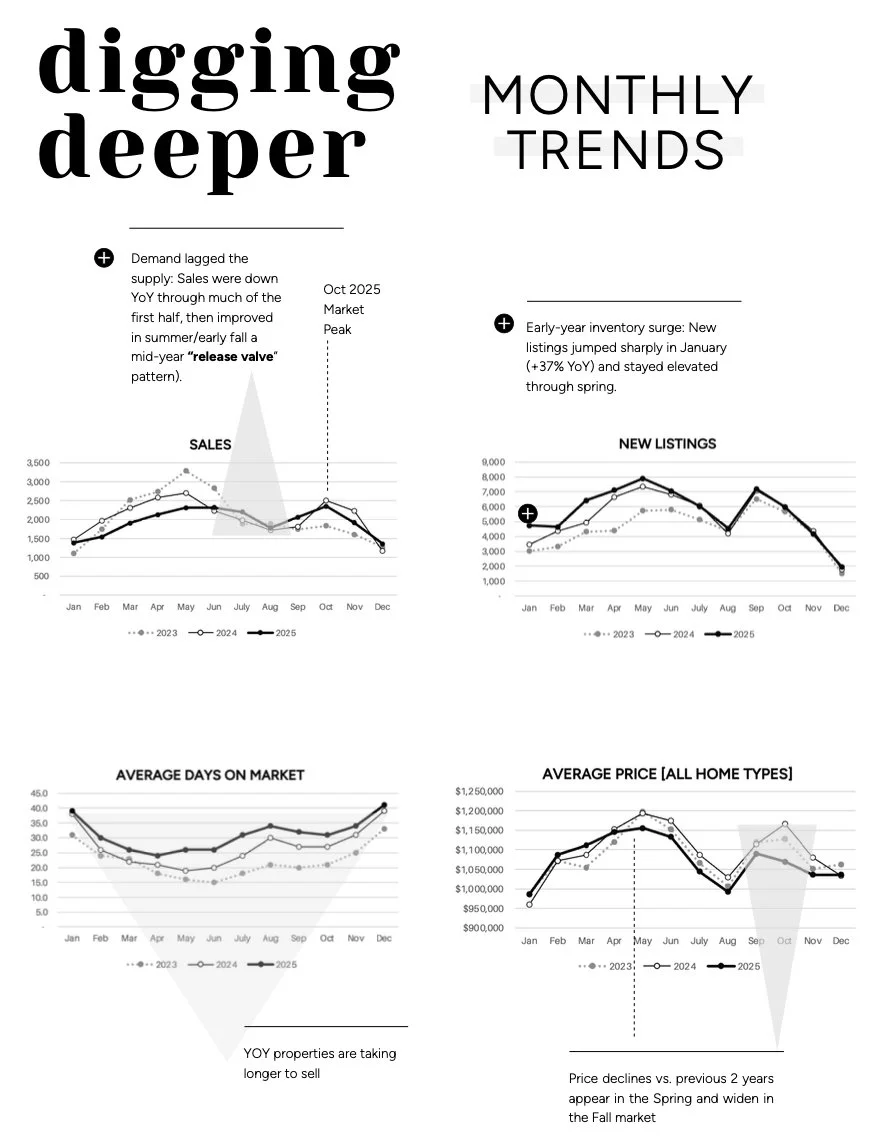
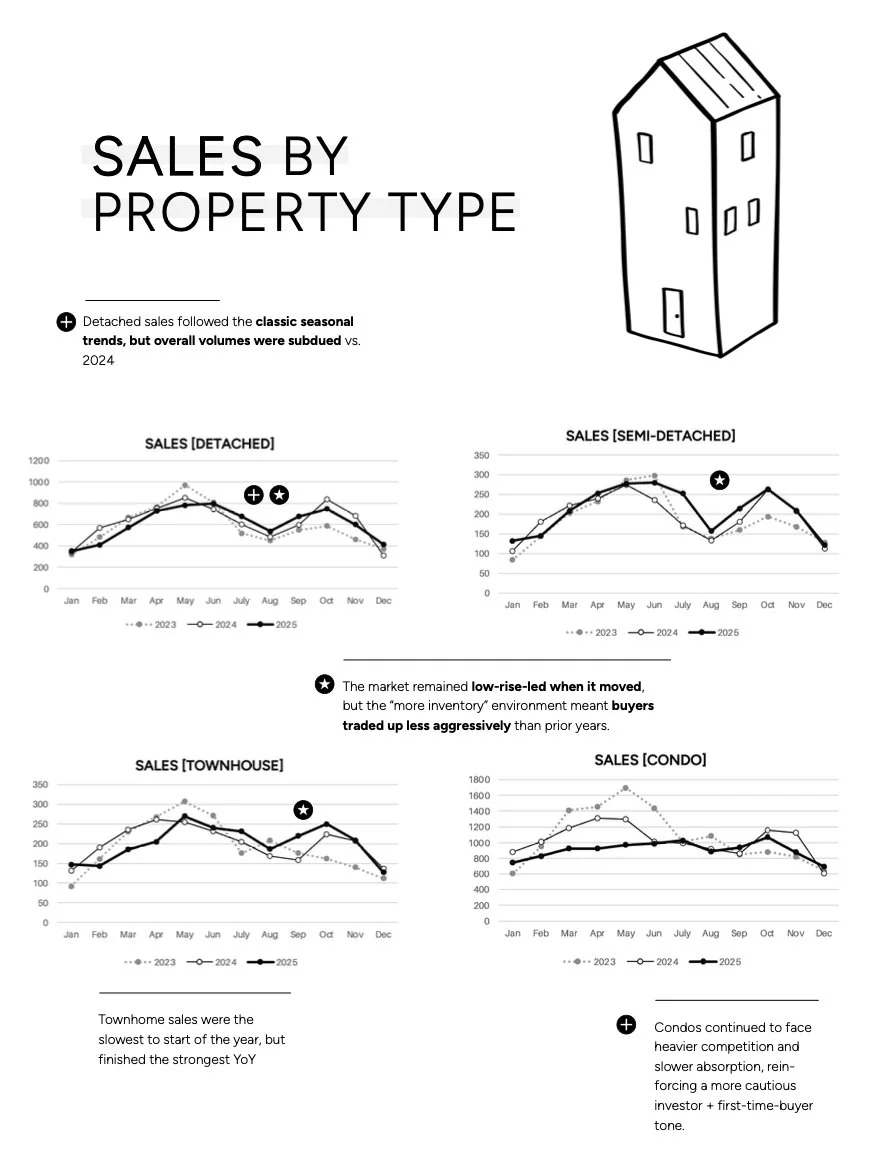
Toronto’s housing market ended 2025 with a more nuanced story than the broader GTA. While annual sales across the region declined amid economic uncertainty, Toronto saw stronger activity in December, with home sales up year-over-year compared to December 2024—a notable divergence from GTA-wide trends.

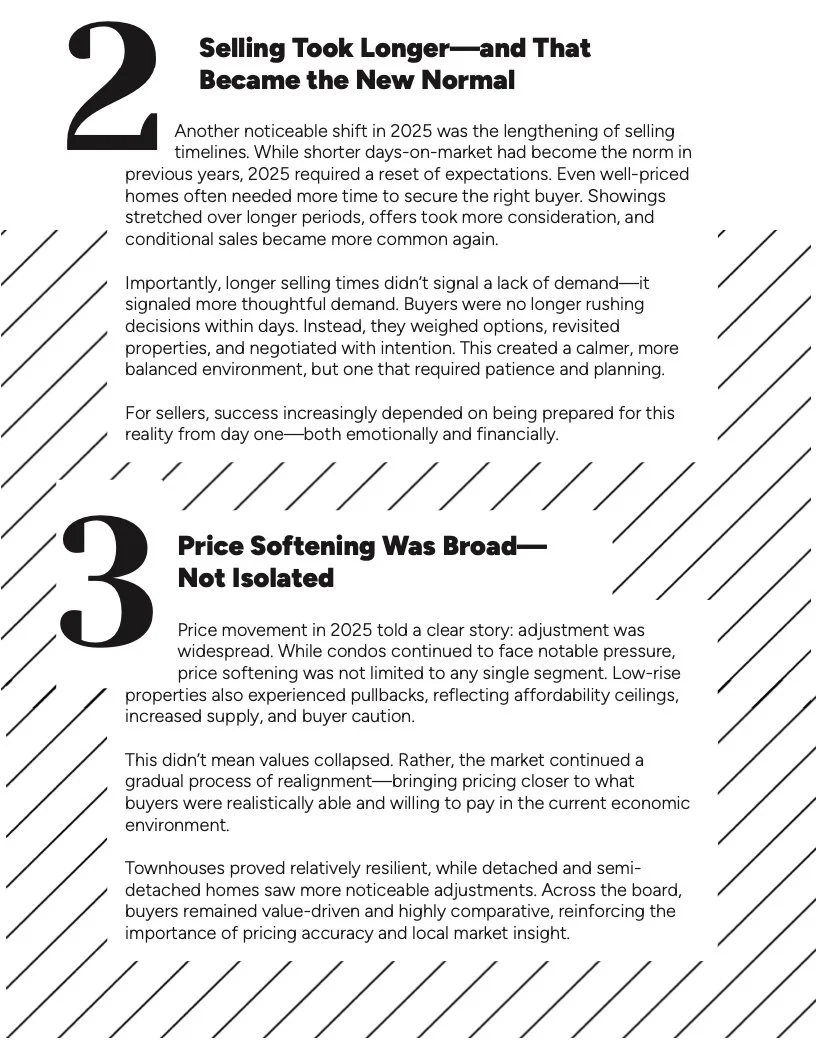
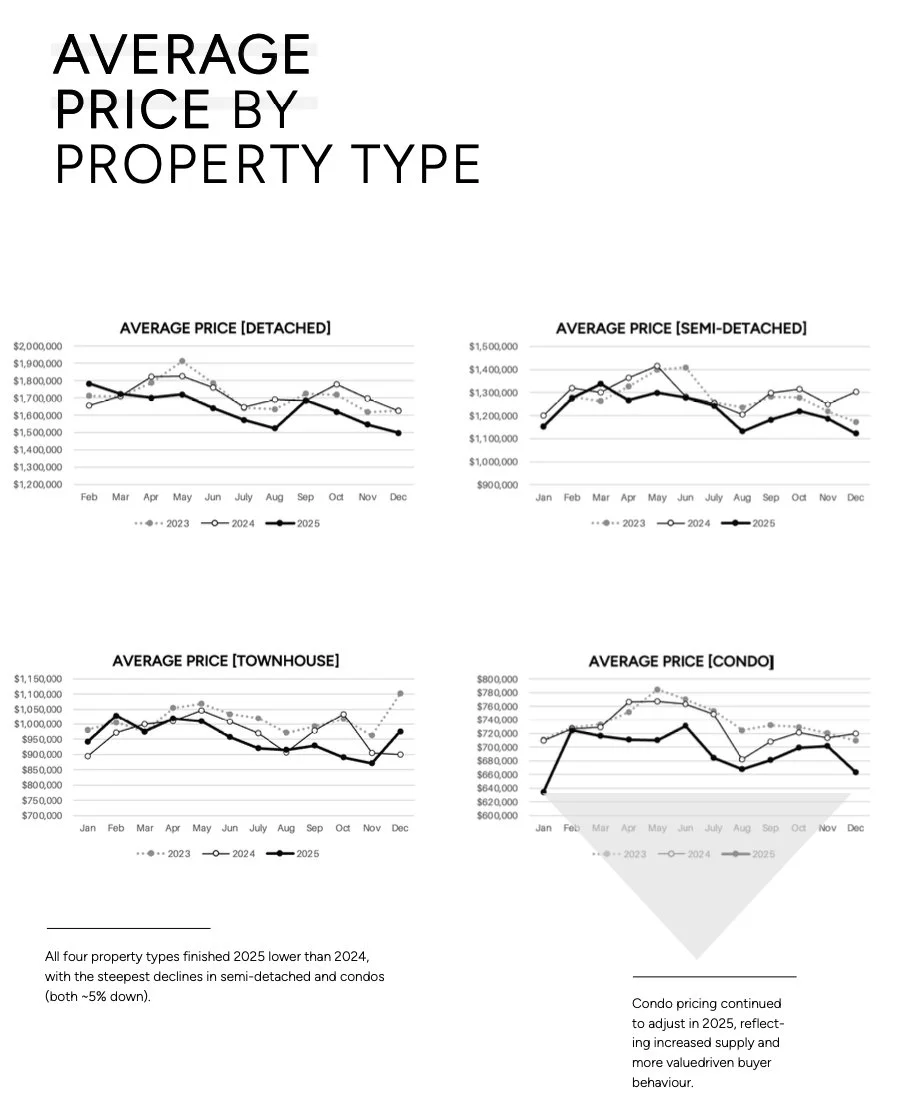
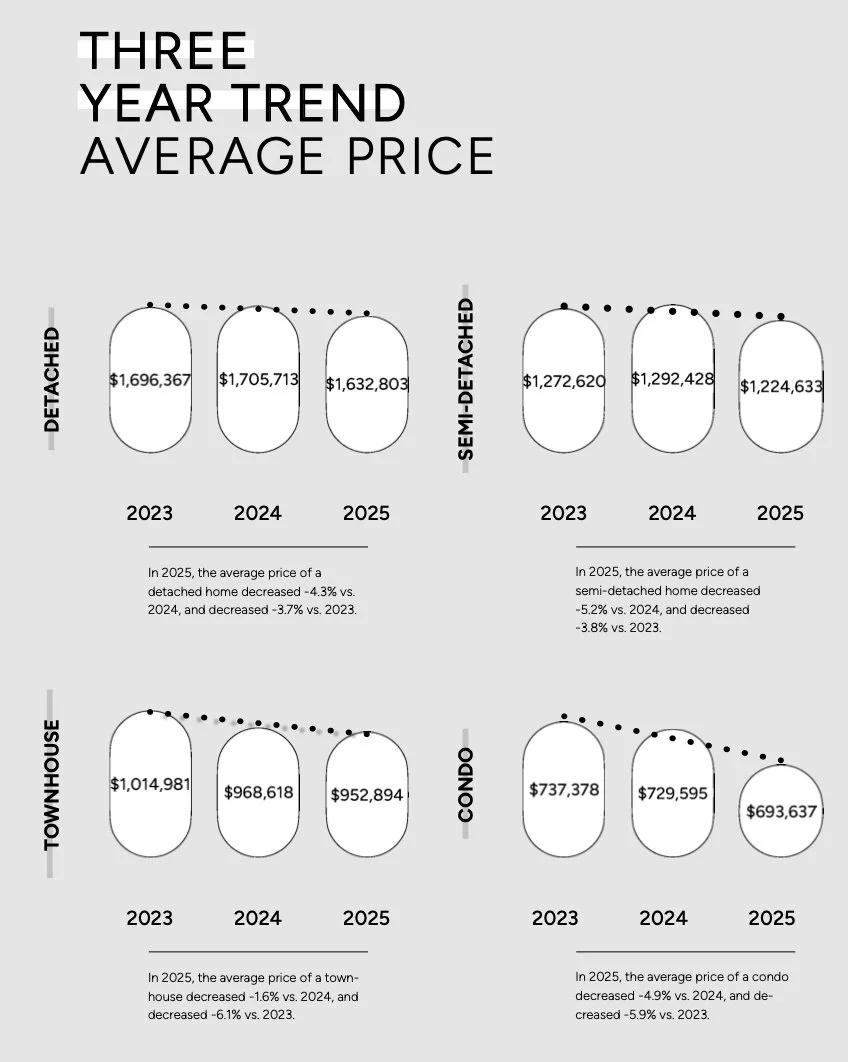
Throughout 2025, elevated inventory levels and softer pricing improved affordability, giving buyers more leverage and time to be selective. Average prices trended lower over the year, helping reset expectations and drawing some buyers back into the market—particularly in the City of Toronto, where demand tends to rebound first when conditions stabilize.

December’s increase in Toronto sales suggests early signs of pent-up demand beginning to surface, even as many households remain cautious. Buyers continue to focus on value, employment stability, and longer-term economic clarity before making major commitments.

Prices remain more accessible than a year ago, supported by both downward price adjustments and easing mortgage rates. That combination is creating opportunities—especially for well-prepared buyers and realistically priced listings.

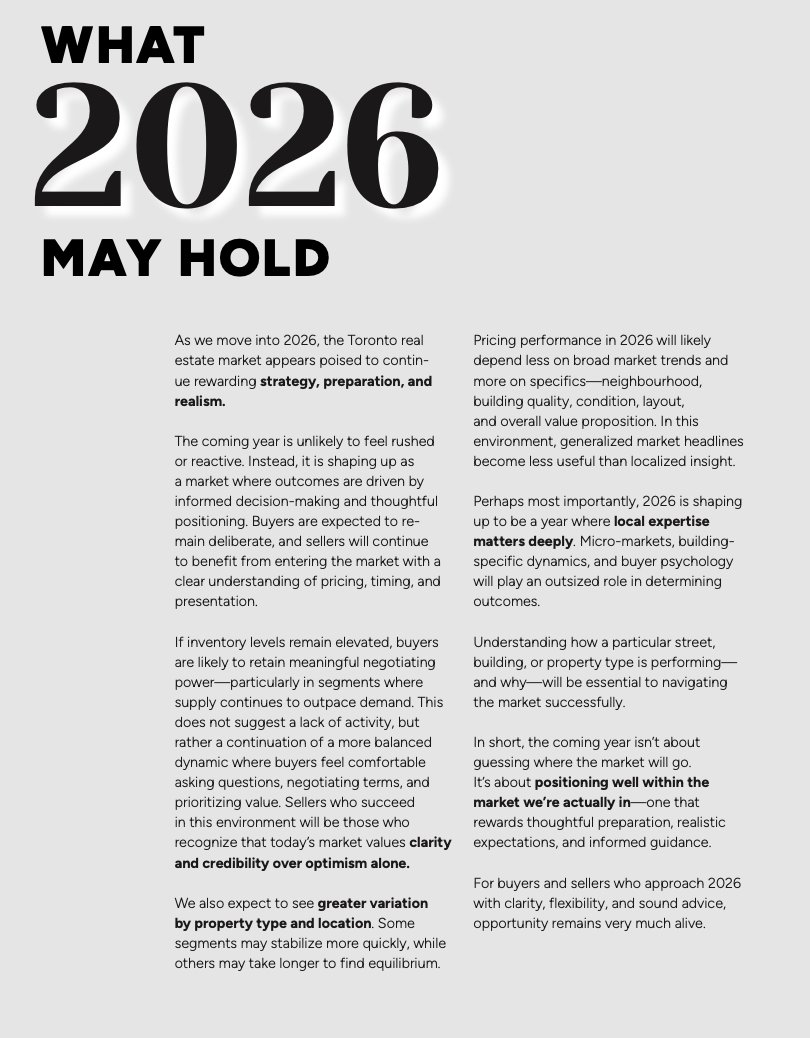
Looking ahead to 2026, confidence will be the key driver. If economic conditions, employment outlooks, and trade relationships continue to stabilize, Toronto is well positioned to see momentum build ahead of the rest of the region.

For now, preparation, strategy, and expert guidance are key to making the most of these opportunities. If you’re planning a move, let’s talk about how to position your home — or your purchase — for success in this shifting market.

Looking to buy or sell a home in Toronto? Average prices in December were as follows:

➕Detached $1,498,079 [-4.5% vs. 2024]
➕Semi-detached $1,122,309 [-12% vs. 2024]
➕Townhouse $976,161 [+5% vs. 2024]
➕Condo $663,227 [-7% vs. 2024]
••••••
Data presented is for City of Toronto Only. Source: TRREB.


If you’re thinking about buying, now could be the time to prepare before demand picks up again.

If you’re a seller, strategic pricing and presentation will be key in this competitive market.

Have questions? Reach out anytime!

October Real Estate Report

The Numbers for October 2025 are In!

Toronto’s fall market continued to evolve in October, with buyers benefitting from improved affordability and greater choice. Softer prices and lower borrowing costs created more balanced conditions, giving well-prepared buyers an opportunity to act with confidence.

Detached and semi-detached homes remained more attainable than in recent years, and the condo market continued to offer strong options for both first-time buyers and investors seeking long-term value.

Monthly mortgage payments are trending lower, allowing many buyers to consider homes that better meet their needs. With improved affordability and steady economic conditions, market activity is expected to strengthen once consumer confidence returns.

For now, preparation, strategy, and expert guidance are key to making the most of these opportunities. If you’re planning a move, let’s talk about how to position your home — or your purchase — for success in this shifting market.

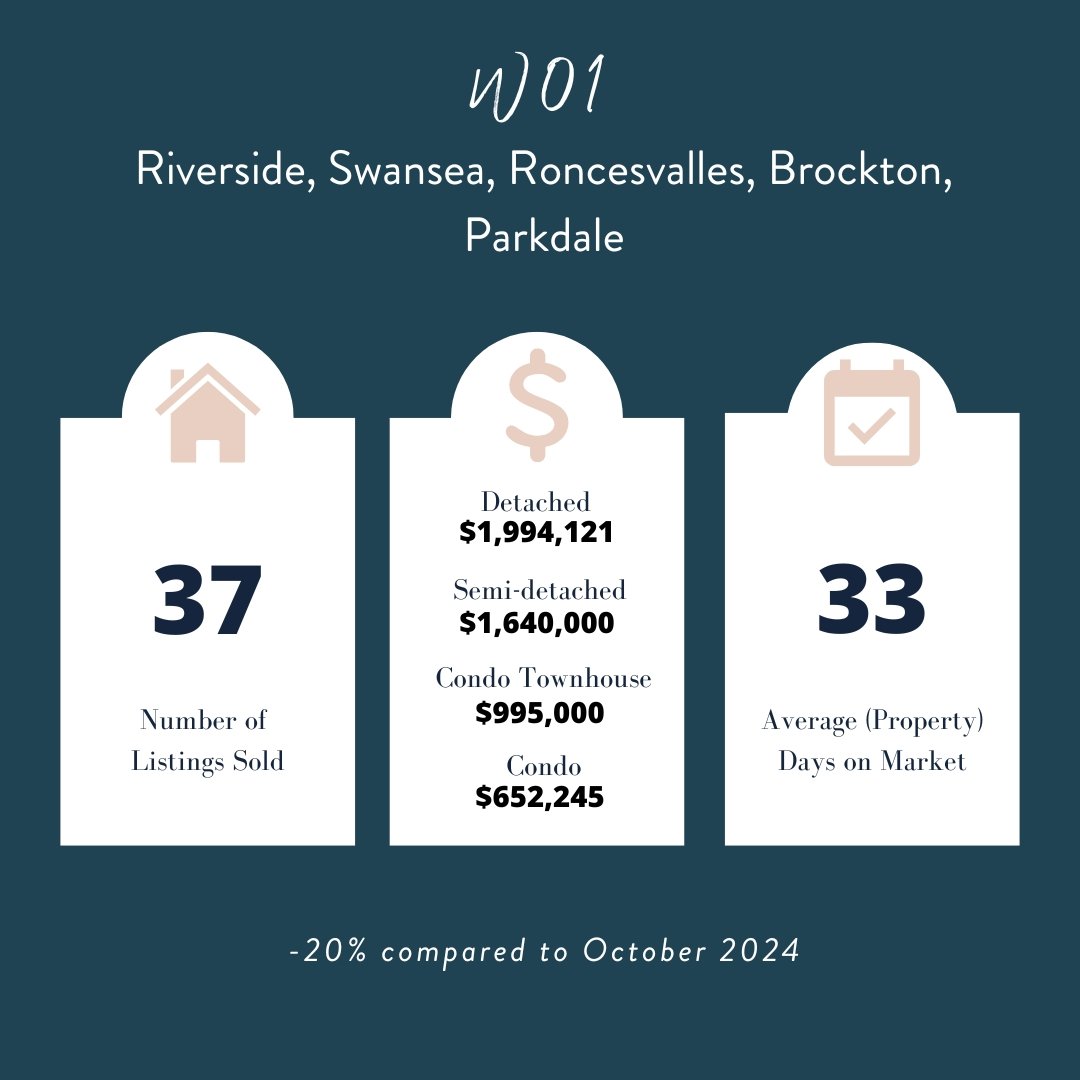
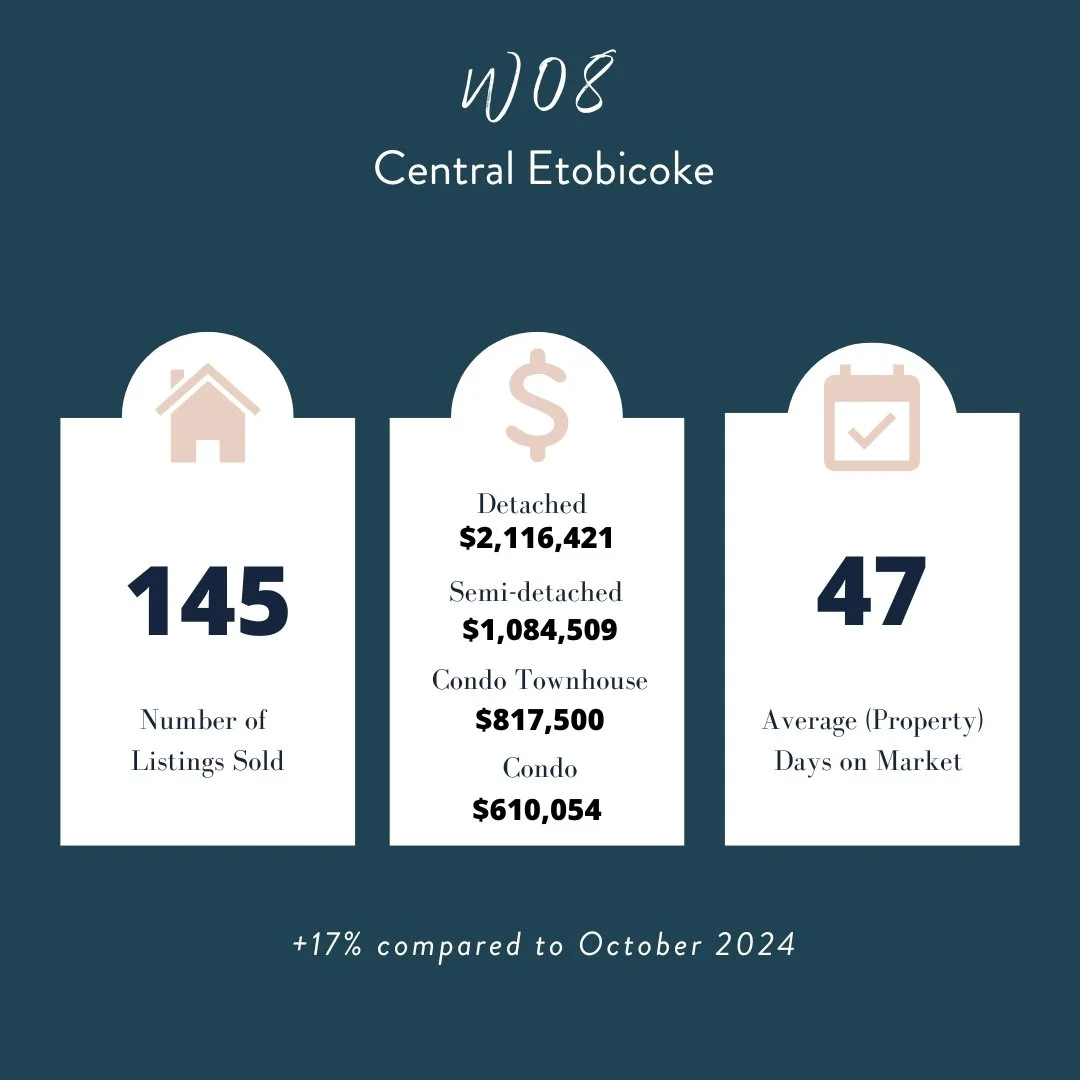
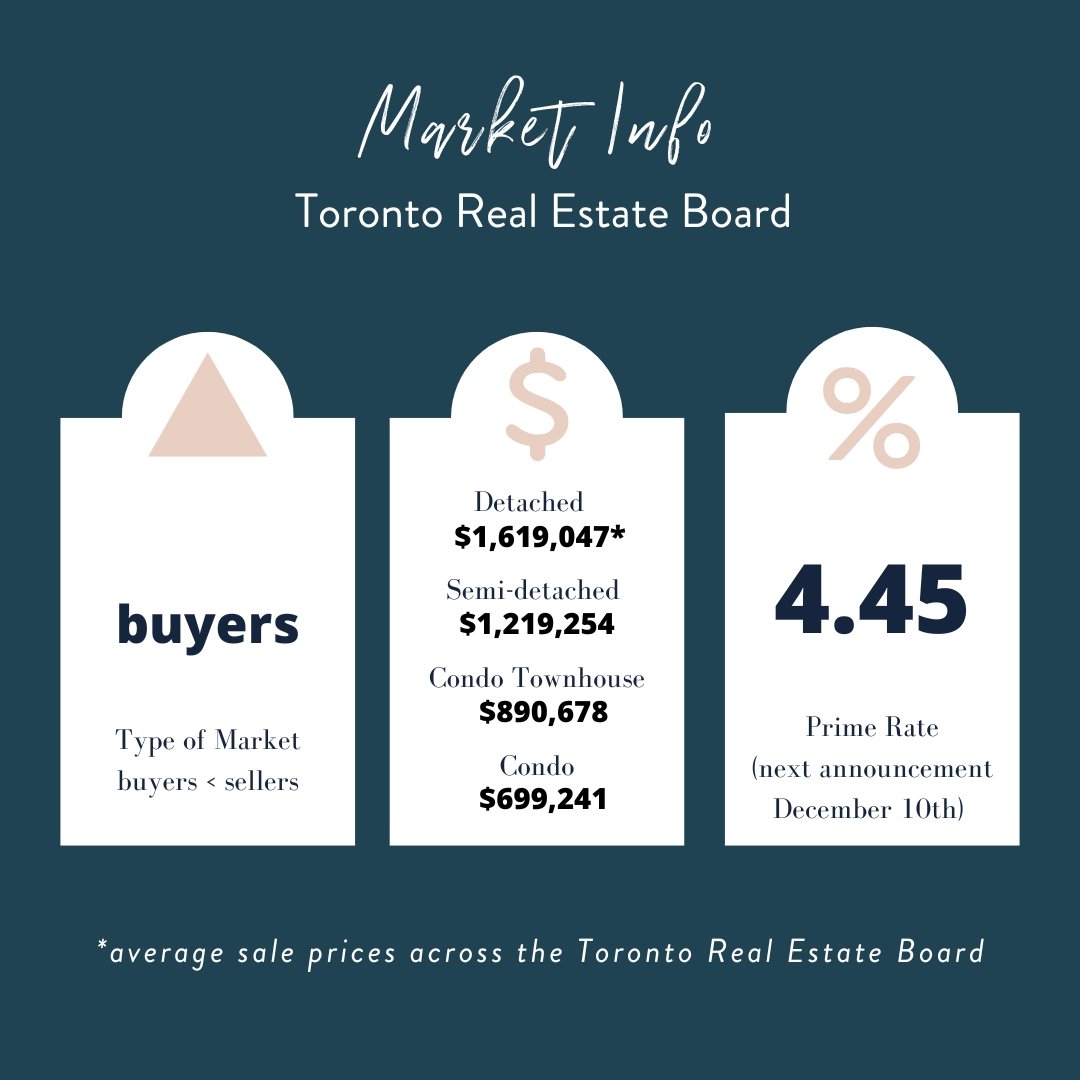
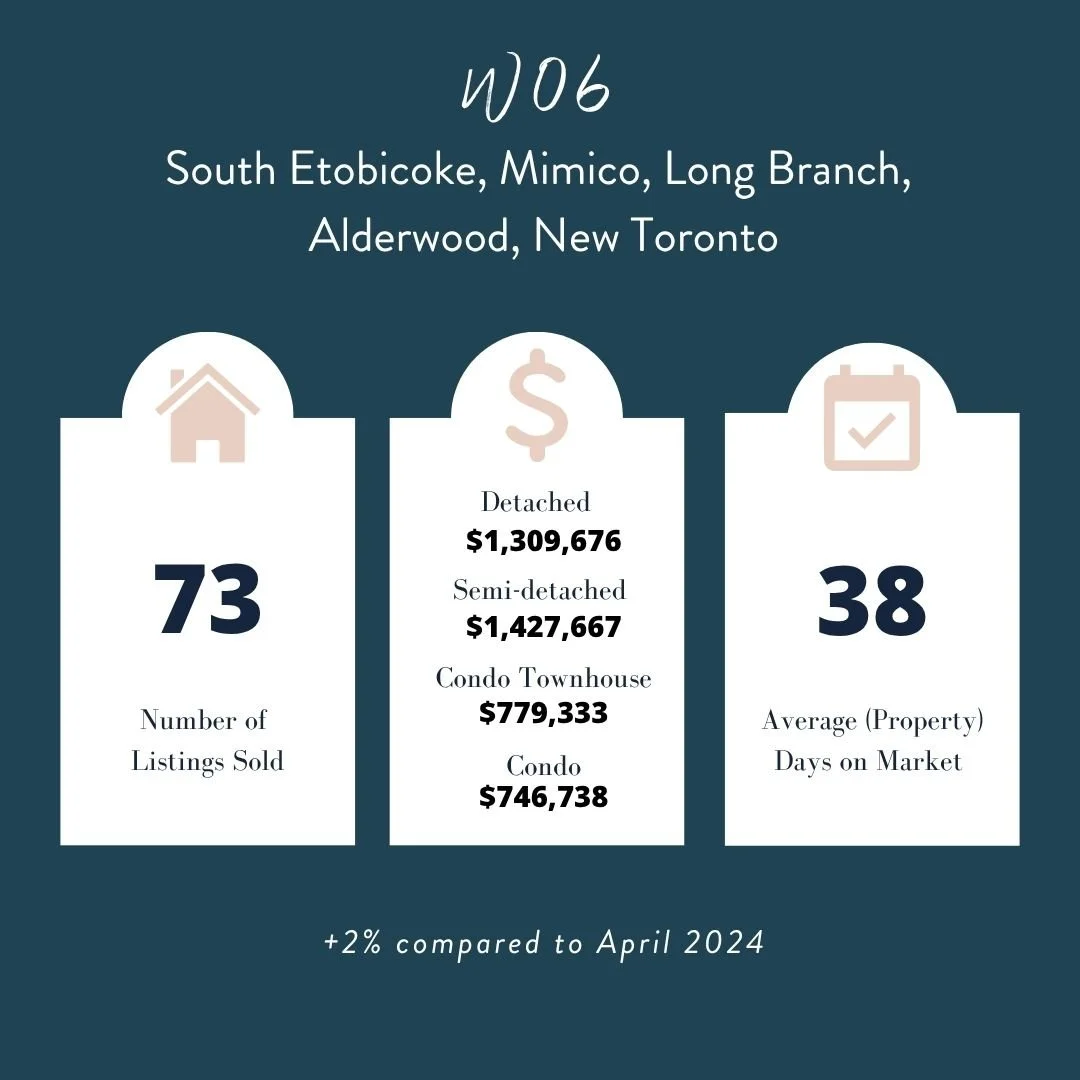
Looking to buy or sell a home in Toronto? Average prices in October were as follows:

➕Detached $1,619,047 [-9% vs. 2024]
➕Semi-detached $1,219,254 [-7% vs. 2024]
➕Townhouse $890,678 [-14% vs. 2024]
➕Condo $699,241 [-3% vs. 2024]
••••••
Data presented is for City of Toronto Only. Source: TRREB.

bestwesttorontorealtors
topbloorwestrealtor
bestbloorwestrealestateagents
topwesttorontorealestatebrokers
topwesttorontorealestateagents


If you’re thinking about buying, now could be the time to prepare before demand picks up again.

If you’re a seller, strategic pricing and presentation will be key in this competitive market.

Have questions? Reach out anytime!

Moving back to Canada from the United States?

movingbacktotorontofromtheus

You’re moving back to Canada from the United States?

Let’s talk about buying a home in Toronto.

Relocating back to Canada after living in the United States can be both an exciting and slightly overwhelming experience. Whether you’ve spent years in the U.S. or just a short stint, the process of moving and settling back into Canadian life does require some planning. One of the most significant steps in this process is choosing where to live & maybe even buying a home — a task that can seem daunting given the differences in markets, regulations, and lifestyles between the two countries, especially if you are starting the process from abroad.

If you’re planning to make the move and lease or purchase a property in our amazing city, read on for some quick tips to help you navigate the journey with confidence.

Plan Your Move

Considerations Before Buying a Home

Immigration and Residency Status

If you're returning to Canada, it's important to confirm your citizenship or residency status. For Canadian citizens, the process is relatively straightforward, but if you're a permanent resident or returning on a temporary basis, you’ll need to check visa or work permit requirements. If you're not already a Canadian citizen or permanent resident, you'll need to look into the immigration process.

Understand the Housing Market

Canada’s real estate market can vary widely depending on the city and province. In cities like Toronto, the market can be extremely competitive and expensive. In smaller towns or rural areas, prices will likely be more reasonable. Do some research on the market trends in the area you’re considering. Websites like realtor.ca & HouseSigma can give you an idea of the prices, types of properties available, and the market dynamics. Check back here each month as we provide a monthly summary of the Toronto Real Estate market focusing on west end neighbourhoods, you can find the ‘numbers’ on our blog.

Set a Budget

Start by evaluating your financial situation. Consider how much you can afford to spend on a home, taking into account your savings, expected income, and the type of mortgage you can qualify for. Canadian banks and financial institutions offer tools to help you assess how much house you can afford. Keep in mind that the housing market in Toronto can be competitive, so having a clear budget will help you make decisions more efficiently.

If you’ve been living in the United States, it’s important to understand the mortgage process in Canada. We suggest you connect with a Mortgage Broker or bank that has experience in helping returning Canadians with their financing. For example, you can generally expect to pay a higher down payment than in the U.S., especially if you're a non-resident.

Pre-Approval Process

Getting pre-approved for a mortgage is essential. This process involves the bank evaluating your financial situation, including your credit history (both in the U.S. and Canada), income & employment status, debts, and assets. Having pre-approval in hand before you start house-hunting not only gives you a better idea of what you can afford but also strengthens your position when making an offer, especially in a competitive market.

Choosing the Right Neighbourhood

(Yes, neighbourhood with a ‘u’!)

Your decision on where to buy will depend largely on your work situation (commute time), family needs (schools) , and lifestyle preferences.

  • Toronto, Etobicoke, Mississauga, Oakville and more: There are so many great neighbourhoods in the Greater Toronto Area and we’ve highlighted a few of our favourites on our neighbourhood pages. We’ve also rounded up some information about choosing a high school and registering for kindergarten.

  • Work: If you’re moving back for work, make sure to factor in the location’s proximity to your job so you aren’t spending extra time commuting. One of the many reasons we love the west end is its proximity to commuter train lines, various highways and two airports.

  • Lifestyle Preferences: Toronto offers a high quality of life with excellent healthcare, outdoor activities, and a welcoming cultural environment. You may want to consider the local amenities, schools (if you have children), and overall community vibe. We live and work in the west end neighbourhoods of the city & are always happy to educate buyers about the differences of each pocket.

House-Hunting: What to Expect

The process of searching for a home in Canada can be similar to the U.S., but there are some differences to keep in mind.

Real Estate Agents

In Canada, it’s common to work with a real estate agent to help you find the right home. Real estate agents are typically paid through the seller's commission, meaning there is no outright cost for buyers to hire one. Your agent can help you navigate the market, vet properties for you, schedule viewings, do background checks on schools & neighbourhoods, and negotiate offers.

Home Inspections and Conditions

Before finalizing a purchase, it’s important to conduct a home inspection. Toronto real estate transactions can include a conditional period during which you can inspect the property and secure financing or in a sellers market, this conditions are met before an offer night so your offer can be competitive. Happy to explain this concept more, just reach out!

Offer and Negotiation

Once you find your dream home, you’ll need to make an offer. Depending on the market, you might face competition, so it’s essential to understand the bidding process. In Toronto, homes can sell for above the asking price due to high demand. Be prepared for some negotiation, and trust your agent to advise you on the best strategy.

The Closing Process

Once your offer is accepted, you’ll move into the closing process. This involves finalizing your mortgage, signing the necessary legal documents, and ensuring that the title of the property is transferred to you. You’ll also need to budget for closing costs, which can include legal fees, title insurance, land transfer taxes, and moving expenses.

Land Transfer Taxes

Canada has a land transfer tax that varies by province (& city!) and is based on the purchase price of the home. For instance, in Toronto you can the provincial and city land transfer tax rates, so be sure to account for these costs when planning your budget. A handy calculator can be found here.

Registering the Property

Finally, the property will need to be registered in your name with the local land registry office. This step is typically handled by a lawyer, but it’s something to keep in mind.

Moving home

After you’ve bought your new home, the fun part begins, settling in!

Moving back to Canada means adjusting to a new set of norms, from public healthcare to Canadian tax laws and cultural differences. Here are a few things to keep in mind as you transition:

  • Healthcare: As a Canadian citizen, you’ll have access to the country’s universal healthcare system, though you may need to apply for your provincial health card (OHIP) once you’ve moved back.

  • Social Services: You may be eligible for certain Canadian government benefits such as the Canada Child Benefit or the GST/HST credit, depending on your circumstances. Visit Canada.ca for all the details.

  • Cultural Adjustment: Even if you’re Canadian by birth, returning after a long time abroad can require some re-adjustment. From winter weather (hello snow!) to different cultural references, take the time to reacquaint yourself with your surroundings.

Moving back to Canada and buying a home is a super exciting time, but it also requires thorough planning. With careful financial preparation, an understanding of the real estate market, and the right support system in place, you can make the transition smooth and successful.

If you’d like to learn more about how we approach relocation services and could help you in your next chapter in Canada, don’t hesitate to reach out. Welcome home!

April Real Estate Report

The Numbers for April are In!

April home sales followed the regular seasonal trend with an increase relative to March. However, total residential transactions in the Greater Toronto Area (GTA) were down compared to the same time last year, as potential buyers continue to wait for lower borrowing costs and for certainty about the trajectory of the economy.

“Following the recent federal election, many households across the GTA are closely monitoring the evolution of our trade relationship with the United States. If this relationship moves in a positive direction, we could see an uptick in transactions driven by improved consumer confidence and a market that is both more affordable and better supplied,” said TRREB President Elechia Barry-Sproule.

“Inventory levels remained elevated historically in April, pointing to substantial choice for households looking to purchase a home in the GTA. Buyers took advantage of this choice when negotiating purchase prices, which resulted in a lower average price across market segments compared to last year. Lower prices coupled with lower borrowing costs translated into more affordable monthly mortgage payments,” said TRREB Chief Information Officer Jason Mercer.

In this dynamic landscape, having a knowledgeable and trusted realtor by your side is essential. Whether you’re thinking about buying, selling, or just exploring your options, we’re here to help guide you every step of the way!

Looking to buy or sell a home in Toronto? Average prices in April were as follows:

➕Detached $1,700,710 [-6.8% vs. 2024]
➕Semi-detached $1,266,322 [-7.2% vs. 2024]
➕Townhouse $1,018,449 [+.7% vs. 2024]
➕Condo $710,724 [-7.3% vs. 2024]
••••••
Data presented is for City of Toronto Only. Source: TRREB.


If you’re thinking about buying, now could be the time to prepare before demand picks up again.

If you’re a seller, strategic pricing and presentation will be key in this competitive market.

Have questions? Reach out anytime!
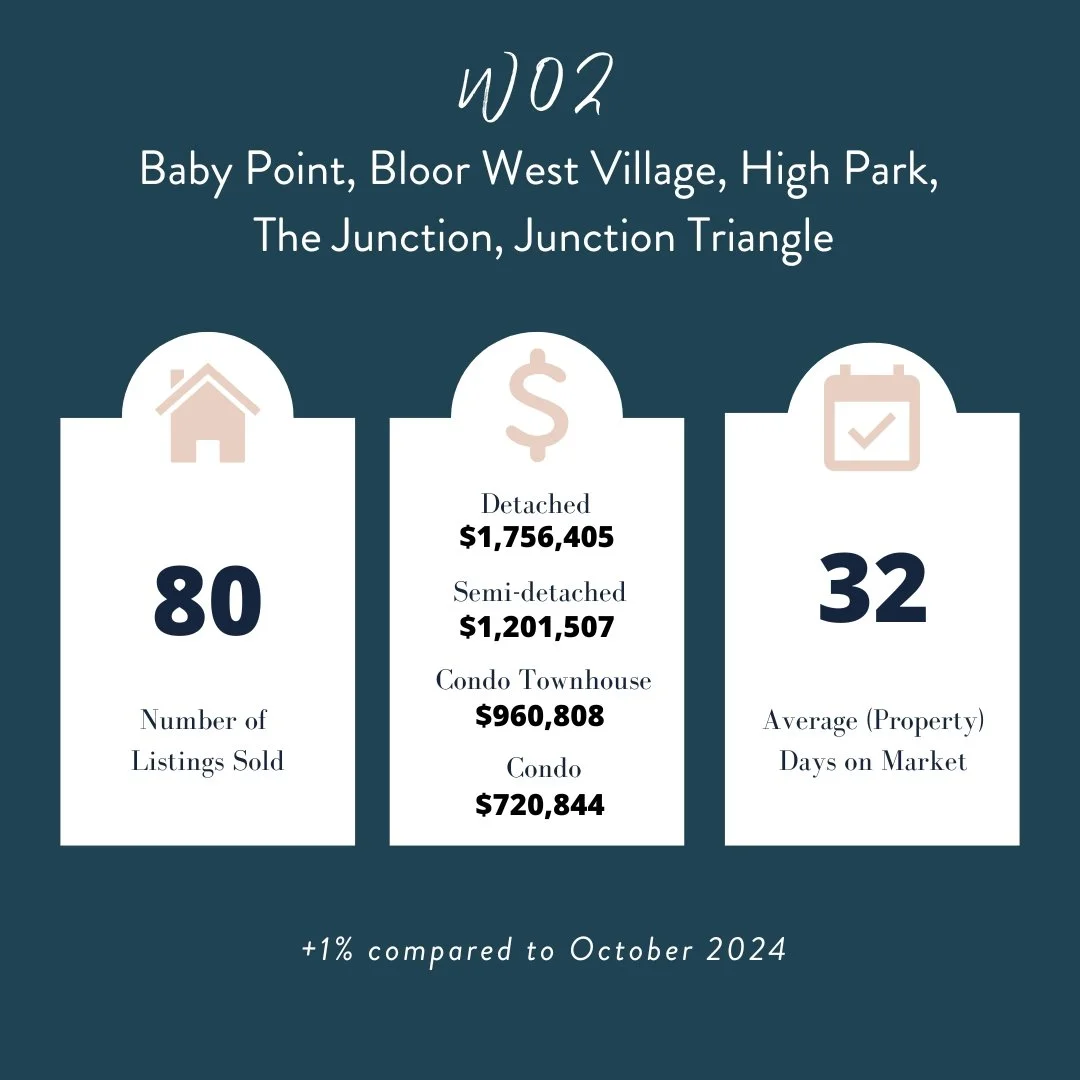
March Real Estate Report

The Numbers for March are In!

According the TRREB Market Watch Report homeownership in the GTA became more affordable this March compared to last year, thanks to a combination of lower borrowing costs and softer home prices. Monthly mortgage payments are now more manageable, especially for households looking to enter the market.

Increased listings are giving buyers more choice and greater negotiating power, helping to keep prices in check while improving overall affordability. This is welcome news as we head into the spring market, where further rate cuts are expected to support demand.

However, with ongoing trade uncertainty and an upcoming federal election, many potential buyers are holding off on making a move. Confidence in the economy and job security remains a key factor in driving home buying activity.

Looking ahead, if economic conditions stabilize and public policy becomes more supportive, we may see a boost in sales activity. In the meantime, current market conditions present a good opportunity for well-prepared buyers.

The catch? We are seeing the return of multiple offer situations as well as pre-emptive offers in sought after west-end neighbourhoods. The current market is a mix of homes selling quickly for well over asking & homes that are sitting for a few extra days on market providing an opportunity for buyers.

In this dynamic landscape, having a knowledgeable and trusted realtor by your side is essential. Whether you’re thinking about buying, selling, or just exploring your options, we’re here to help guide you every step of the way!

Looking to buy or sell a home in Toronto? Average prices in March were as follows:

➕Detached $1,723,489 [+1% vs. 2024]
➕Semi-detached $1,337,498 [+3% vs. 2024]
➕Townhouse $975,801 [-2% vs. 2024]
➕Condo $716,460 [-2% vs. 2024]

••••••

Data presented is for City of Toronto Only. Source: TRREB.

If you’re thinking about buying, now could be the time to prepare before demand picks up again.

If you’re a seller, strategic pricing and presentation will be key in this competitive market.

Have questions? Reach out anytime!
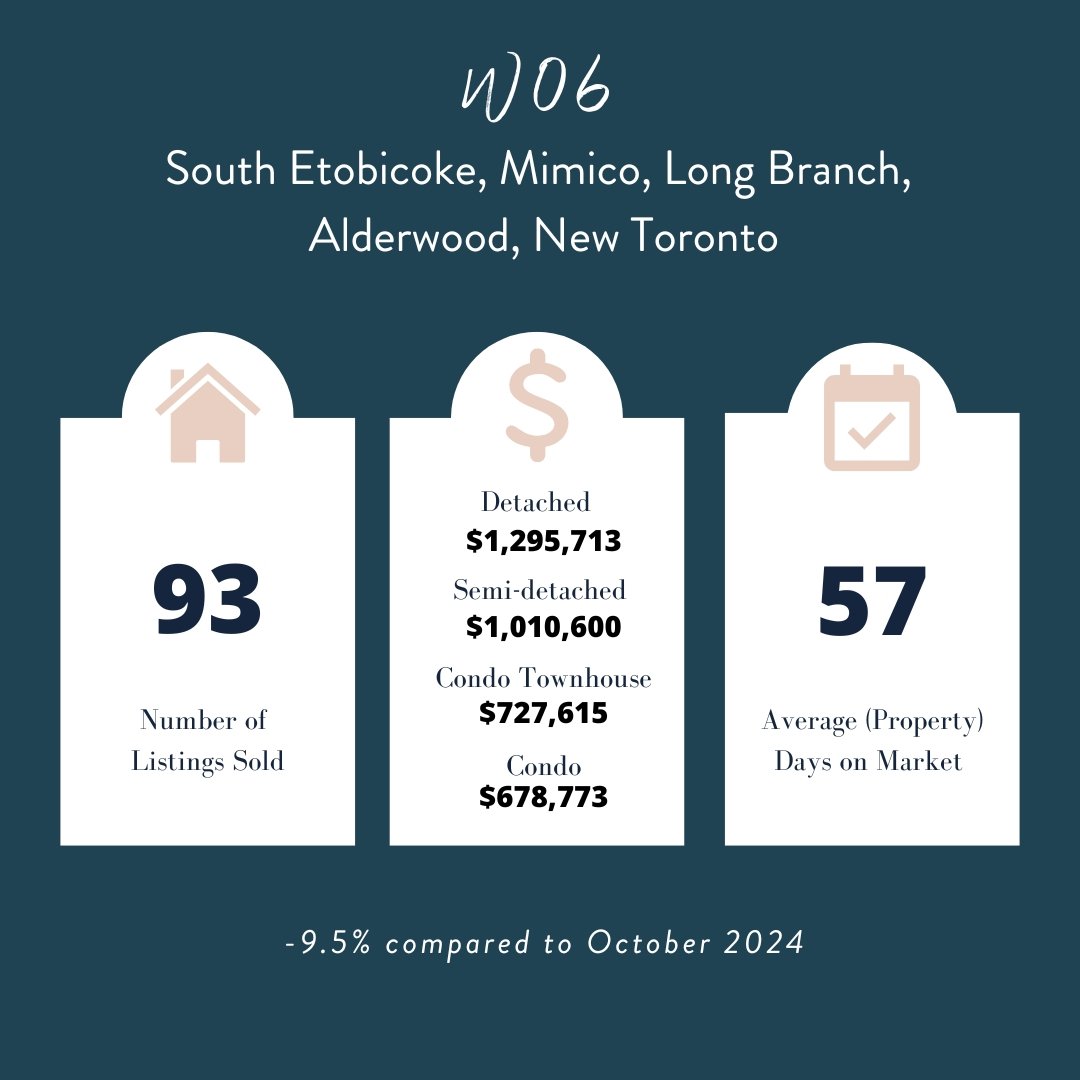
February Real Estate Report

The Numbers for February are in!
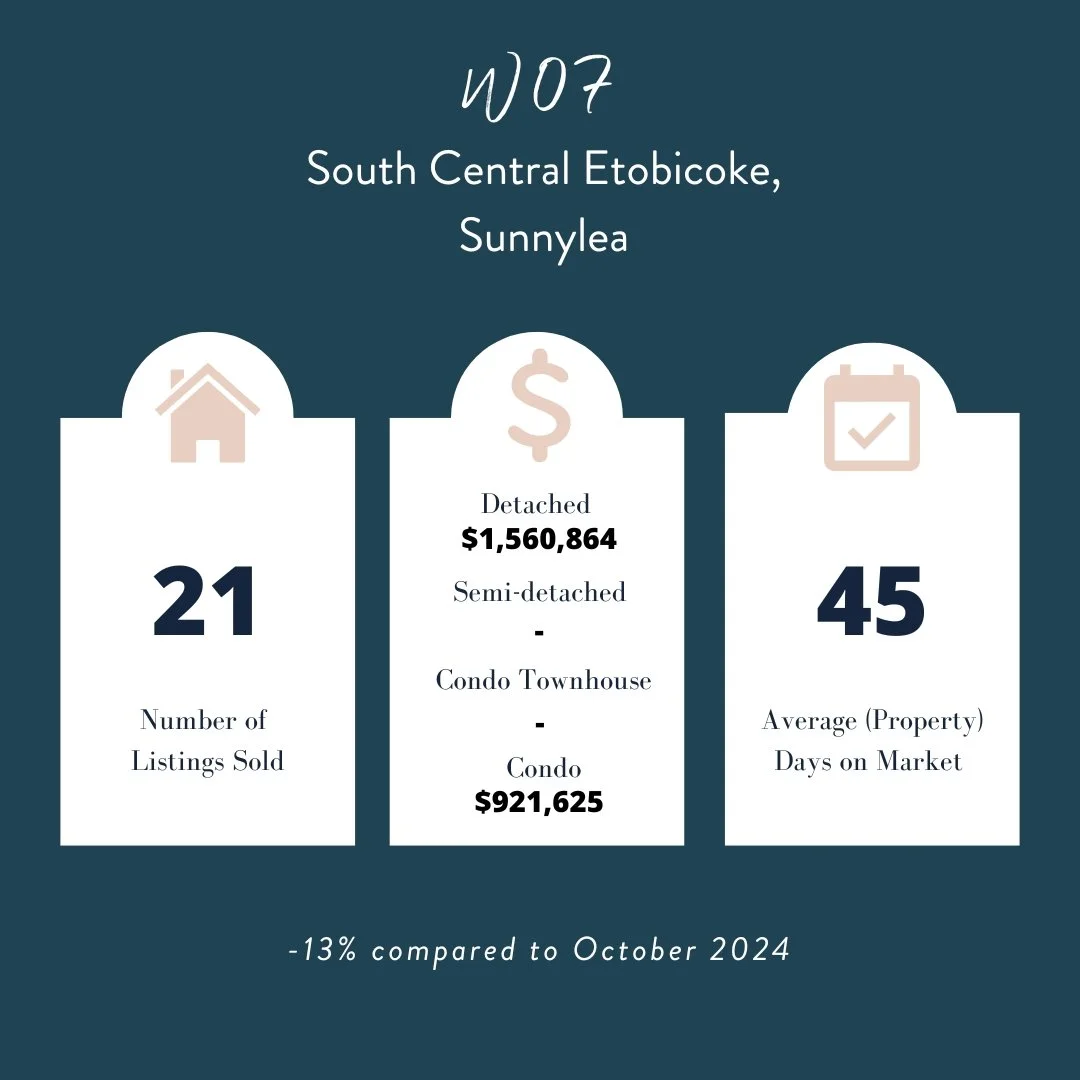
While home sales slowed last month, demand remains strong as many Toronto households are eager to purchase a home. The challenge? Affordability. Higher mortgage rates continue to impact buyers’ ability to comfortably enter the market, but relief could be on the horizon. With borrowing costs expected to decline in the coming months, many buyers may soon be ready to make their move.

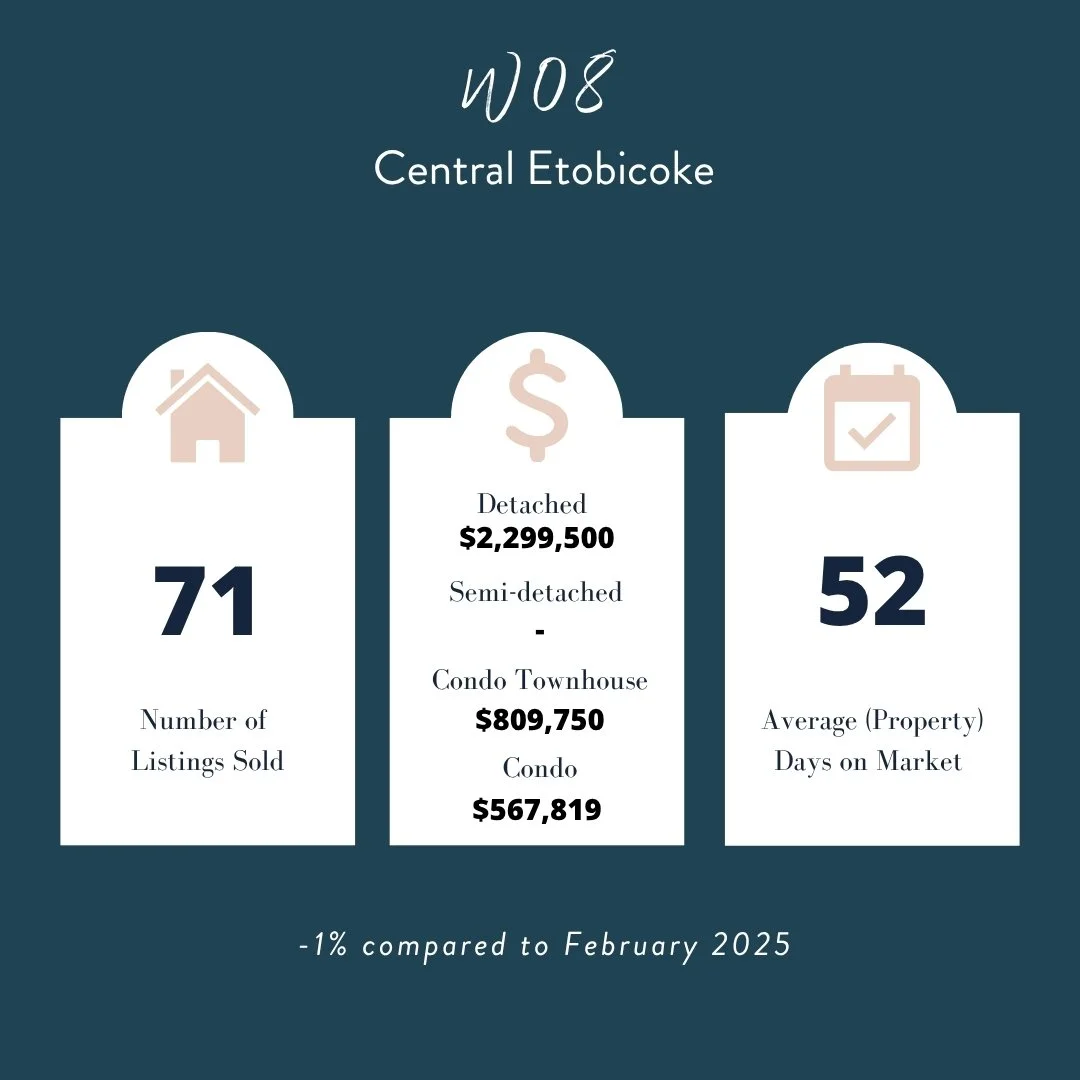
In February 2025, Toronto home sales were down 22% year-over-year, while new listings increased by 7%. This has given buyers more negotiating power, keeping price growth moderated. The average selling price inched up 1% to $1,087,077 compared to last year.

Beyond affordability, economic uncertainty—particularly around trade relations with the U.S.—has led some buyers to take a “wait and see” approach. However, as confidence improves and interest rates ease, stronger sales activity is expected in the latter half of the year.

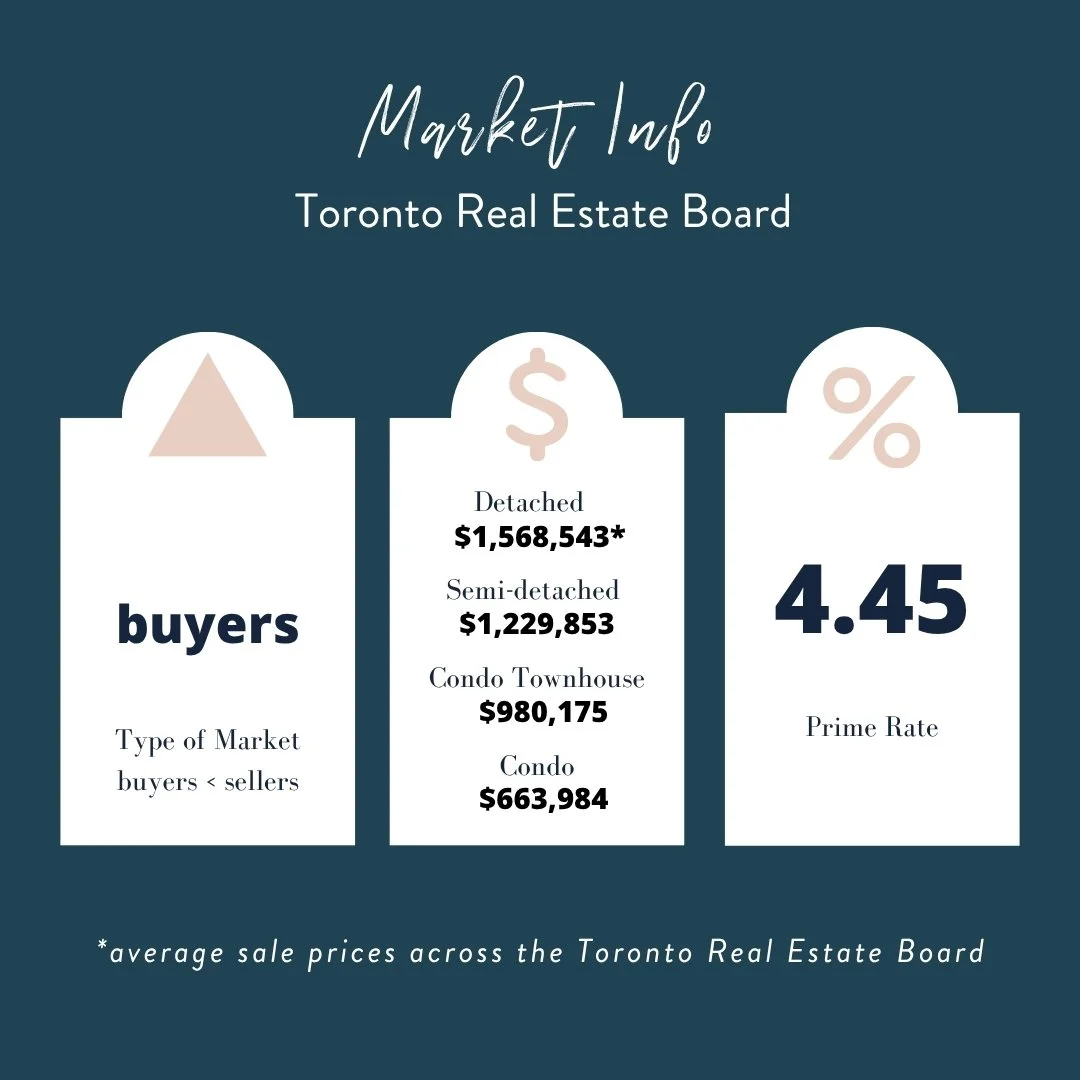
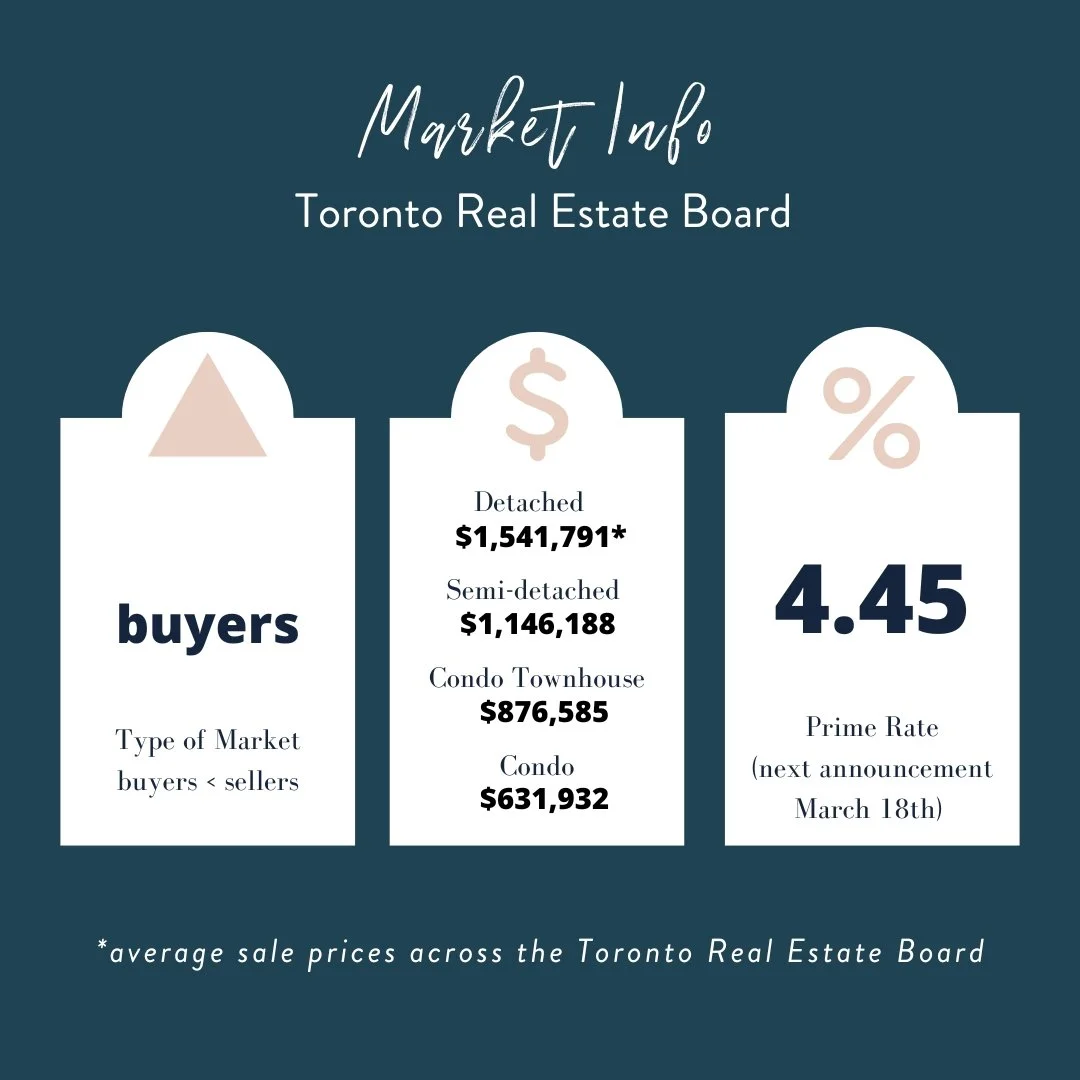
Looking to buy or sell a home in Toronto? Average prices in February were as follows:

➕Detached $1,782,2626 [+8% vs. 2024]
➕Semi-detached $1,275,214 [-3% vs. 2024]
➕Townhouse $1,028,339 [+6% vs. 2024]
➕Condo $724,632 [0% vs. 2024]

••••••

Data presented is for City of Toronto Only. Source: TRREB.

If you’re thinking about buying, now could be the time to prepare before demand picks up again.

If you’re a seller, strategic pricing and presentation will be key in this competitive market.

Have questions? Reach out anytime!